Trading Drills for Intraday: Building Professional Muscle Memory in 2026
Stop hesitating in Nifty & Bank Nifty. Use our trading drills for intraday to build professional muscle memory and execute with precision. Master 2026 markets.
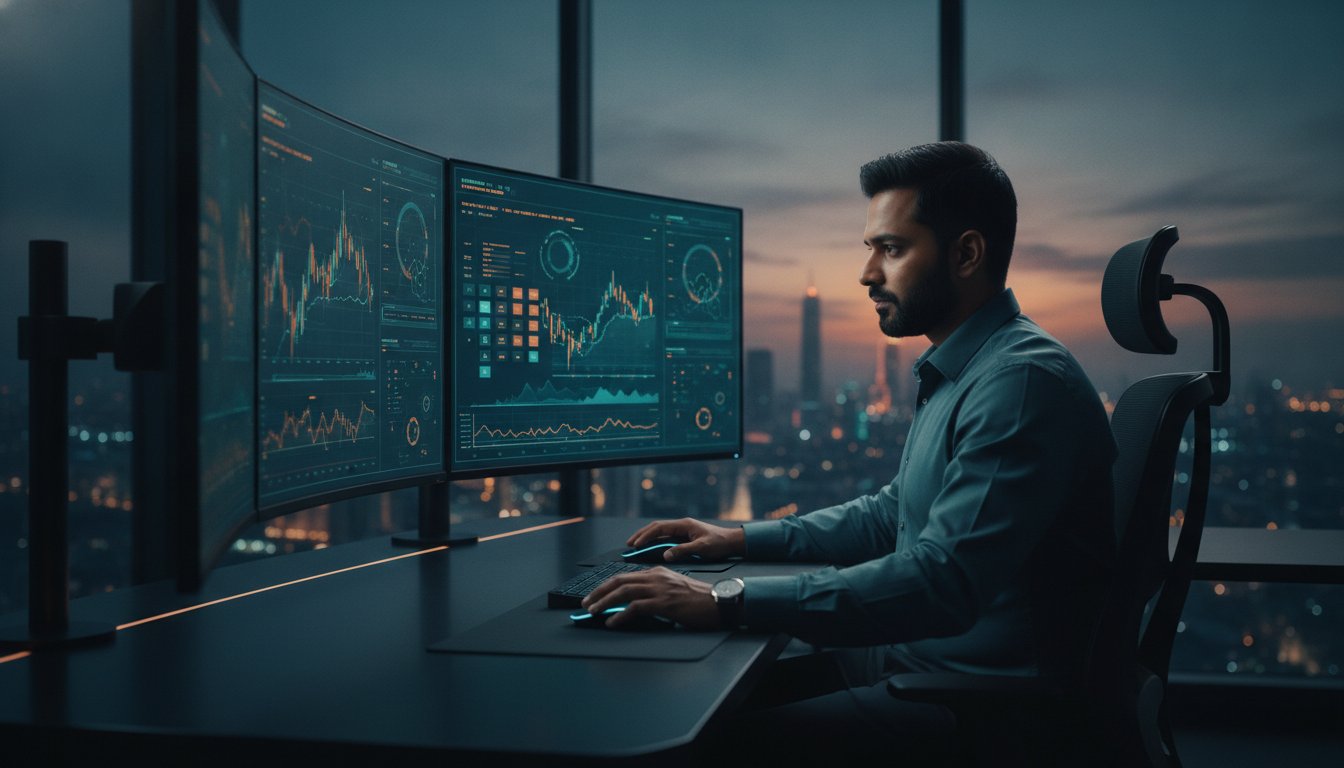
Most traders treat their screens like a movie theater, watching price action unfold with passive curiosity rather than tactical intent. You can memorize every candlestick pattern in the book, but without specific trading drills for intraday, your execution will always lag behind your analysis. It's the difference between reading a flight manual and sitting in a high-fidelity cockpit. In 2026, the Indian markets don't reward those who merely understand; they reward those who react with instinctive precision.
It's exhausting to watch a perfect Nifty setup trigger while you hesitate on the entry. You feel the sting of capital lost to indecision or the burn of over-trading during spikes in Bank Nifty volatility. We agree that theoretical knowledge is a safety net that often fails when the market moves at high velocity. This article promises to transform your approach by shifting you from passive observation to rigorous simulation drills that prepare you for the next trading day.
We'll break down the methodology of building professional muscle memory. You'll discover how to use historical NSE session replays to uncover hidden market rhythms and establish a repeatable pre-market routine. It's time to stop guessing and start drilling until your entry and exit reflexes become second nature. Mastery is a result of practice, not luck.
Key Takeaways
- Bridge the gap between strategy knowledge and split-second execution by moving from passive observation to high-fidelity simulation.
- Implement specific trading drills for intraday to build the instinctive reflexes required to navigate Nifty and Bank Nifty volatility.
- Discover why dynamic session replay provides a superior learning environment compared to static backtesting or traditional paper trading.
- Master high-stakes scenarios like the Opening Range Breakout through repetitive, risk-free practice using historical NSE tick data.
- Establish a professional pre-market routine that uses simulation to map out critical price levels and prepare for the next trading day.
Table of Contents
- The Simulation Gap: Why Strategy Knowledge ≠ Trading Mastery
- The Anatomy of an Effective Intraday Drill
- Comparing Practice Methods: Static Backtesting vs. Dynamic Replay
- 5 Essential Intraday Drills to Master the Opening Bell
- Turning Drills into Dollars: The 1paisaa Preparation Framework
The Simulation Gap: Why Strategy Knowledge ≠ Trading Mastery
Understanding a setup is one thing. Executing it while the Nifty 50 ticks violently against your position is another. Most traders spend hundreds of hours studying static charts, yet they freeze when the opening bell rings. This disconnect exists because strategy knowledge isn't the same as trading mastery. One is academic; the other is athletic. To bridge this gap, you need trading drills for intraday that simulate the raw, unscripted nature of the live market. You must move beyond the theory to find the rhythm of the tape.
Traditional paper trading often fails because it lacks the temporal pressure of real-time NSE volatility. When you "paper trade" on a static app, you're usually entering prices manually or waiting for delayed data. It feels like a game. There is no consequence for hesitation. In the real world, a two-second delay on a Bank Nifty breakout can mean the difference between a profitable entry and chasing a spike. Learning these lessons on a live account carries a heavy psychological and financial cost. It's an expensive way to realize you wasn't prepared for the speed of the market. A realistic stock market simulator acts as the necessary bridge between the textbook and the terminal.
The Illusion of Static Backtesting
Static backtesting is like looking at a finished crime scene. You see where the price started and where it ended, but you miss the struggle in between. It hides the "pain" of the drawdown. When you scroll through a historical chart, your brain suffers from hindsight bias. You see the successful breakout because you already know it happened. Dynamic session replay changes this dynamic. It forces you to watch the candle form, tick by tick, exposing every flaw in your entry timing and emotional endurance. Understanding day trading fundamentals through a static lens is a start, but it won't save you when the volatility ramps up and your screen turns red.
Reflex vs. Reason in Intraday Trading
In the high-stakes environment of 2026, the window to act is often less than three seconds. If you have to stop and reason through your checklist, the opportunity is gone. Professional traders don't think during the execution phase; they react. This is why trading drills for intraday are essential. By replaying historical NSE sessions, you train your brain to recognize patterns as they develop, not after they've finished. High-fidelity data creates a realistic environment that builds genuine confidence. You move from conscious, slow decision-making to instinctive action. You stop being a spectator and start being a participant who commands the screen with calm readiness.
The Anatomy of an Effective Intraday Drill
A trading drill is not a casual session of watching the screen. It is a focused, repetitive practice of a specific market scenario designed to build professional muscle memory. Think of it as a pilot in a flight simulator. You don't fly the whole route; you practice landings until they are perfect. For trading drills for intraday, this means isolating high-probability setups and replaying them until the execution becomes a reflex. It's about training your eyes to see what others miss and your hands to act without the weight of hesitation.
To be effective, your drill environment must meet three hard requirements. First, you need high-fidelity historical NSE data. If the price movement doesn't mimic the exact tick-by-tick reality of the 2026 markets, your brain won't learn the correct patterns. Second, you need temporal control to manipulate the flow of time. Third, you must have a clear objective, such as mastering the 9:15 AM Opening Range Breakout (ORB). Academic research on trading simulations confirms that this type of structured environment significantly accelerates the learning curve compared to unstructured live exposure. You aren't just playing; you are engineering your success.
Variable Speed Training
The market moves fast, but your learning doesn't have to. By slowing the replay down to 0.5x, you can observe the subtle dance of candle formation and order flow that usually vanishes in the heat of the moment. You see the fake-outs before they happen. Conversely, speeding the market up to 5x allows you to practice trend identification across multiple hours in just minutes. This flexibility is what makes trading drills for intraday so potent. The 1paisaa Simulator provides this specific temporal manipulation. It lets you compress time to see the big picture or expand it to master the micro-movements of a breakout.
The Feedback Loop
Practice without a mirror is just guessing. An effective drill requires a feedback loop where you record your simulated trades to identify recurring execution errors. Are you hesitating on the entry? Are you exiting too early due to minor pullbacks? By comparing your performance against "Perfect Execution" scenarios, you uncover the hidden gaps in your psychology. Before you hit play, use the intraday preparation tool to mark your levels. This ensures you are drilling with a plan, not just reacting to noise. It turns every session into an investigative process where the past holds the keys to your future performance.
Refining your strategy in a risk-free environment is the only way to ensure you're ready for the next bell. You can start building this discipline today with the 1paisaa Simulator. Mastery is not a matter of luck; it is a result of the work you do when the market is closed.
Comparing Practice Methods: Static Backtesting vs. Dynamic Replay
The evolution of trading practice has moved from dusty paper logs to high-fidelity, AI-driven environments. In 2026, the retail landscape in India is undergoing a massive shift. Serious traders are moving away from free "mock stock" apps that feel like games. They are choosing professional session replay for Nifty and Bank Nifty instead. This transition is driven by a simple cost-benefit analysis. A subscription to a pro-level tool is a small investment compared to the massive capital losses caused by a single emotional error in the live market. You don't practice to save money; you practice to protect it.
Most beginners get stuck in a loop of passive learning. They watch videos and hope for the best. Professional trading drills for intraday require a more active approach. You must decide whether you are training to be a scientist who analyzes data or an athlete who executes in the heat of the moment. Both roles are important, but they require different tools and different mindsets. The key is knowing which method solves which problem.
Static Backtesting: The Scientist’s Approach
Static backtesting is about the math. It is the best method for verifying if a strategy has a genuine mathematical edge over a large sample size, such as 1,000 trades. You look at the past to see if your logic holds up. However, it is the worst way to prepare your brain for the chaos of the live market. You can learn about backtesting software for NSE to find your edge, but don't expect it to fix your execution. It tells you what to do, but it doesn't train you to do it when the candles are moving at full speed.
Dynamic Replay: The Athlete’s Approach
Dynamic replay is where trading drills for intraday become transformative. This is the athlete's approach. It is best for refining your entry and exit speed while managing the inevitable emotional spikes of a live session. This is why the 1paisaa Simulator is the gold standard for Indian traders. It recreates the physical act of trading. You aren't just clicking a button on a static chart; you are interacting with price action as it unfolds. This builds the muscle memory required to stay calm when the Nifty starts to trend. You see the setup. You feel the pulse of the market. You execute without hesitation.
5 Essential Intraday Drills to Master the Opening Bell
The first 45 minutes of the NSE session are often the most chaotic. For many, it is a source of anxiety; for the disciplined, it is a goldmine. To extract value from this window, you need specific trading drills for intraday that sharpen your focus before the first candle even closes. These drills are not just about learning a strategy. They are about training your nervous system to handle the 2026 market's velocity with calm readiness.
- Drill 1: The 15-Minute ORB Reflex Drill. Trigger your entry the moment the opening range breaks. No hesitation. No second-guessing.
- Drill 2: The "Gap and Go" Validation Drill. Learn to distinguish between a genuine trend and a liquidity trap by watching volume spikes at key levels.
- Drill 3: The Volatility Squeeze Drill. Practice the difficult art of doing nothing during Nifty consolidations. Wait for the expansion.
- Drill 4: The Reversal Recognition Drill. Identify V or W bottoms as they form tick-by-tick. Spot the shift in momentum before the news hits.
- Drill 5: The Stop-Loss Discipline Drill. Close the trade instantly when your level is breached. You are drilling the physical act of cutting a loss without emotional friction.
Setting Up Your Training Session
Selecting the right environment is critical for growth. Use the stock market simulator India to filter for high-volume NSE stocks that match your current focus. If you struggle with trending markets, replay a major breakout day. To truly test your vision, try the "No-Indicator" Drill. Strip the chart to pure price action. If you can't see the trend without a moving average, you don't see the trend at all. Trading drills for intraday are most effective when you remove the crutches and rely on raw price movement.
Measuring Progress
Data is the only objective mirror. Track your "Time to Execution" for every signal. In the fast-paced 2026 landscape, a five-second delay is an eternity. You should also evaluate your "Quality of Entry" alongside your win rate. Did you get the best possible price, or did you chase a moving target? You can practice intraday trading without money using these metrics to ensure your growth is measurable and repeatable.
Ready to build your professional muscle memory? Start your high-fidelity training with the 1paisaa Simulator today and master the opening bell.
Turning Drills into Dollars: The 1paisaa Preparation Framework
Execution is the final step of a long, invisible process. Professional traders don't just show up at 9:15 AM and hope for the best. They've already traded the market four times in their head before the bell rings. The "Night Before" routine is where the real money is made. By replaying today's NSE session, you uncover exactly what you missed. You see the patterns you ignored because of live-market stress. You identify the subtle shift in volume that preceded the breakout. Using trading drills for intraday during your evening review turns today's mistakes into tomorrow's edge.
The Intraday Preparation Tool allows you to map support and resistance levels with surgical precision. You mark your levels on the simulator, then play the session to see how price action interacts with your zones. This builds the conviction required to hold a winner when the market gets choppy. In 2026, the most successful retail traders follow a strict ratio. They spend four hours in simulation for every one hour in the live market. This deliberate practice ensures that when real capital is at stake, the move feels familiar. It's just another drill. You aren't guessing; you're executing a pre-validated plan.
The 1paisaa Advantage
1paisaa provides access to over 50 NSE stocks and historical sessions, allowing for diverse practice across different market cycles. The high-fidelity replay mimics the exact speed and tick data of the Indian markets, ensuring your training is grounded in reality. It's a cinematic experience that reveals the hidden layers of price action. Ironically, slowing things down to 0.5x speed is the fastest way to accelerate your learning. You train your eyes to see the trap before it snaps. You learn to recognize the "V" bottom as it's forming, not after the move has finished. This is the essence of professional trading drills for intraday.
Ready for the Next Session?
The "Drill-to-Trade" philosophy bridges the gap between being a student of the market and being a master of it. Practice until your setups are unmistakable. Transitioning from the simulator to a live NSE account becomes a seamless step rather than a leap of faith. You've seen the move a thousand times before. You've felt the rhythm. Now, you simply perform. A Realistic Stock Market Simulator is the essential tool for 2026 traders who demand professional-grade execution and absolute clarity in a chaotic landscape.
Don't leave your capital to chance. Start your risk-free practice today and build the muscle memory that separates the pros from the crowd.
Command the Bell with Professional Reflexes
Success in the 2026 Indian markets is an athletic feat. It requires more than just a theoretical understanding of price patterns. You must bridge the gap between analysis and action through rigorous trading drills for intraday. By shifting your focus from passive observation to high-fidelity simulation, you build the muscle memory required to navigate Nifty volatility with absolute calm. You've discovered that while static backtesting serves the scientist, dynamic replay is the essential tool for the trader who intends to win.
The tools for mastery are within your reach. Our platform provides a risk-free environment for strategy refinement, featuring high-fidelity tick data replay that is already trusted by disciplined NSE traders. It's time to stop guessing and start engineering your results. Master the NSE with the 1paisaa Simulator, Try the Free Demo Today.
The past holds the keys to your future performance. Replay the tape. Refine your reflex. The next opening bell is waiting for the version of you that is prepared to lead. Your journey toward instinctive execution begins with the very next drill.
Frequently Asked Questions
How is a trading simulator different from paper trading?
A trading simulator like the 1paisaa Simulator provides a high-fidelity environment that recreates the exact temporal pressure of the market, whereas traditional paper trading often relies on static charts or delayed data. Simulators allow you to experience tick-by-tick movements in real-time or adjusted speeds. This builds professional muscle memory because you're reacting to price action as it unfolds, not just marking a price on a spreadsheet after the move has already finished.
Can I practice Bank Nifty intraday drills on 1paisaa?
Yes, you can practice Bank Nifty drills using the Historical NSE Session Replay feature. The platform recreates real intraday sessions from the NSE with exact tick data, allowing you to master the unique volatility of major indices. You can replay past sessions to identify recurring patterns and refine your execution strategies. This risk-free environment is perfect for building the confidence needed to handle high-stakes index movements during live trading hours.
Do I need real-time data to perform these intraday drills?
No, you don't need a real-time data feed to perform effective trading drills for intraday. In fact, using historical tick data is often superior for learning because it allows you to replay specific market scenarios whenever you choose. You can slow down the market to observe order flow or speed it up to see the broader trend. This flexibility removes the stress of live market hours while providing an identical technical environment for skill development.
How many hours should I spend on trading drills every week?
Serious traders often follow a ratio of four hours in simulation for every one hour spent in the live market. For most retail traders in 2026, dedicating ten to fifteen hours per week to focused drills provides a significant edge. Consistency is more important than raw volume. Short, high-intensity sessions that focus on a specific setup, like the opening range breakout, are more effective than long, aimless hours of clicking buttons.
Is it possible to practice intraday trading after market hours?
Absolutely. The 1paisaa Simulator is designed specifically for after-market practice, allowing you to replay any historical NSE session at your convenience. This means you can refine your strategies late at night or during the weekend when the live markets are closed. By using the Intraday Preparation Tool to map levels before you hit play, you turn your off-hours into a productive training camp that prepares you for the next day.
Why does 1paisaa use historical NSE session replay instead of random data?
Randomly generated data cannot replicate the complex human psychology and liquidity clusters found in the real Indian markets. Historical NSE session replay uses exact tick data to ensure that every candle and price spike you see actually happened. This realism is essential for building genuine trading drills for intraday. You need to know that the patterns you're practicing are the same ones you'll encounter when you transition to a live account.
What is the best drill for improving entry timing in high volatility?
The 15-Minute Opening Range Breakout (ORB) Reflex Drill is the gold standard for mastering entry timing. High volatility requires split-second decision-making, and this drill trains your nervous system to act the moment your criteria are met. By replaying the first hour of volatile sessions at 0.5x speed, you learn to see the subtle signs of a breakout before it accelerates, allowing you to enter with precision rather than chasing the move.
Can beginners use the 1paisaa simulator for free?
Yes, beginners can start their journey with a free demo that includes access to 50 stocks across three historical sessions. This allows you to explore the high-fidelity replay environment and test the Intraday Preparation Tool without any financial commitment. It's a risk-free way to understand the "Drill-to-Trade" philosophy before upgrading to a premium subscription for full access to the extensive library of historical NSE market data and advanced simulation features.
Questions
Ready for the Next Session?
The "Drill-to-Trade" philosophy bridges the gap between being a student of the market and being a master of it. Practice until your setups are unmistakable. Transitioning from the simulator to a live NSE account becomes a seamless step rather than a leap of faith. You've seen the move a thousand times before. You've felt the rhythm. Now, you simply perform. A Realistic Stock Market Simulator is the essential tool for 2026 traders who demand professional-grade execution and absolute clarity in a chaotic landscape. Don't leave your capital to chance. Start your risk-free practice today and build the muscle memory that separates the pros from the crowd. Success in the 2026 Indian markets is an athletic feat. It requires more than just a theoretical understanding of price patterns. You must bridge the gap between analysis and action through rigorous trading drills for intraday. By shifting your focus from passive observation to high-fidelity simulation, you build the muscle memory required to navigate Nifty volatility with absolute calm. You've discovered that while static backtesting serves the scientist, dynamic replay is the essential tool for the trader who intends to win. The tools for mastery are within your reach. Our platform provides a risk-free environment for strategy refinement, featuring high-fidelity tick data replay that is already trusted by disciplined NSE traders. It's time to stop guessing and start engineering your results. Master the NSE with the 1paisaa Simulator, Try the Free Demo Today. The past holds the keys to your future performance. Replay the tape. Refine your reflex. The next opening bell is waiting for the version of you that is prepared to lead. Your journey toward instinctive execution begins with the very next drill.
How is a trading simulator different from paper trading?
A trading simulator like the 1paisaa Simulator provides a high-fidelity environment that recreates the exact temporal pressure of the market, whereas traditional paper trading often relies on static charts or delayed data. Simulators allow you to experience tick-by-tick movements in real-time or adjusted speeds. This builds professional muscle memory because you're reacting to price action as it unfolds, not just marking a price on a spreadsheet after the move has already finished.
Can I practice Bank Nifty intraday drills on 1paisaa?
Yes, you can practice Bank Nifty drills using the Historical NSE Session Replay feature. The platform recreates real intraday sessions from the NSE with exact tick data, allowing you to master the unique volatility of major indices. You can replay past sessions to identify recurring patterns and refine your execution strategies. This risk-free environment is perfect for building the confidence needed to handle high-stakes index movements during live trading hours.
Do I need real-time data to perform these intraday drills?
No, you don't need a real-time data feed to perform effective trading drills for intraday. In fact, using historical tick data is often superior for learning because it allows you to replay specific market scenarios whenever you choose. You can slow down the market to observe order flow or speed it up to see the broader trend. This flexibility removes the stress of live market hours while providing an identical technical environment for skill development.
How many hours should I spend on trading drills every week?
Serious traders often follow a ratio of four hours in simulation for every one hour spent in the live market. For most retail traders in 2026, dedicating ten to fifteen hours per week to focused drills provides a significant edge. Consistency is more important than raw volume. Short, high-intensity sessions that focus on a specific setup, like the opening range breakout, are more effective than long, aimless hours of clicking buttons.
Is it possible to practice intraday trading after market hours?
Absolutely. The 1paisaa Simulator is designed specifically for after-market practice, allowing you to replay any historical NSE session at your convenience. This means you can refine your strategies late at night or during the weekend when the live markets are closed. By using the Intraday Preparation Tool to map levels before you hit play, you turn your off-hours into a productive training camp that prepares you for the next day.
Why does 1paisaa use historical NSE session replay instead of random data?
Randomly generated data cannot replicate the complex human psychology and liquidity clusters found in the real Indian markets. Historical NSE session replay uses exact tick data to ensure that every candle and price spike you see actually happened. This realism is essential for building genuine trading drills for intraday. You need to know that the patterns you're practicing are the same ones you'll encounter when you transition to a live account.
What is the best drill for improving entry timing in high volatility?
The 15-Minute Opening Range Breakout (ORB) Reflex Drill is the gold standard for mastering entry timing. High volatility requires split-second decision-making, and this drill trains your nervous system to act the moment your criteria are met. By replaying the first hour of volatile sessions at 0.5x speed, you learn to see the subtle signs of a breakout before it accelerates, allowing you to enter with precision rather than chasing the move.
Can beginners use the 1paisaa simulator for free?
Yes, beginners can start their journey with a free demo that includes access to 50 stocks across three historical sessions. This allows you to explore the high-fidelity replay environment and test the Intraday Preparation Tool without any financial commitment. It's a risk-free way to understand the "Drill-to-Trade" philosophy before upgrading to a premium subscription for full access to the extensive library of historical NSE market data and advanced simulation features.