Replicate a Real Trading Environment at Home for NSE
Stop losing money in F&O. Learn how to replicate a real trading environment at home to practice NSE trading and master your strategy without risking capital.
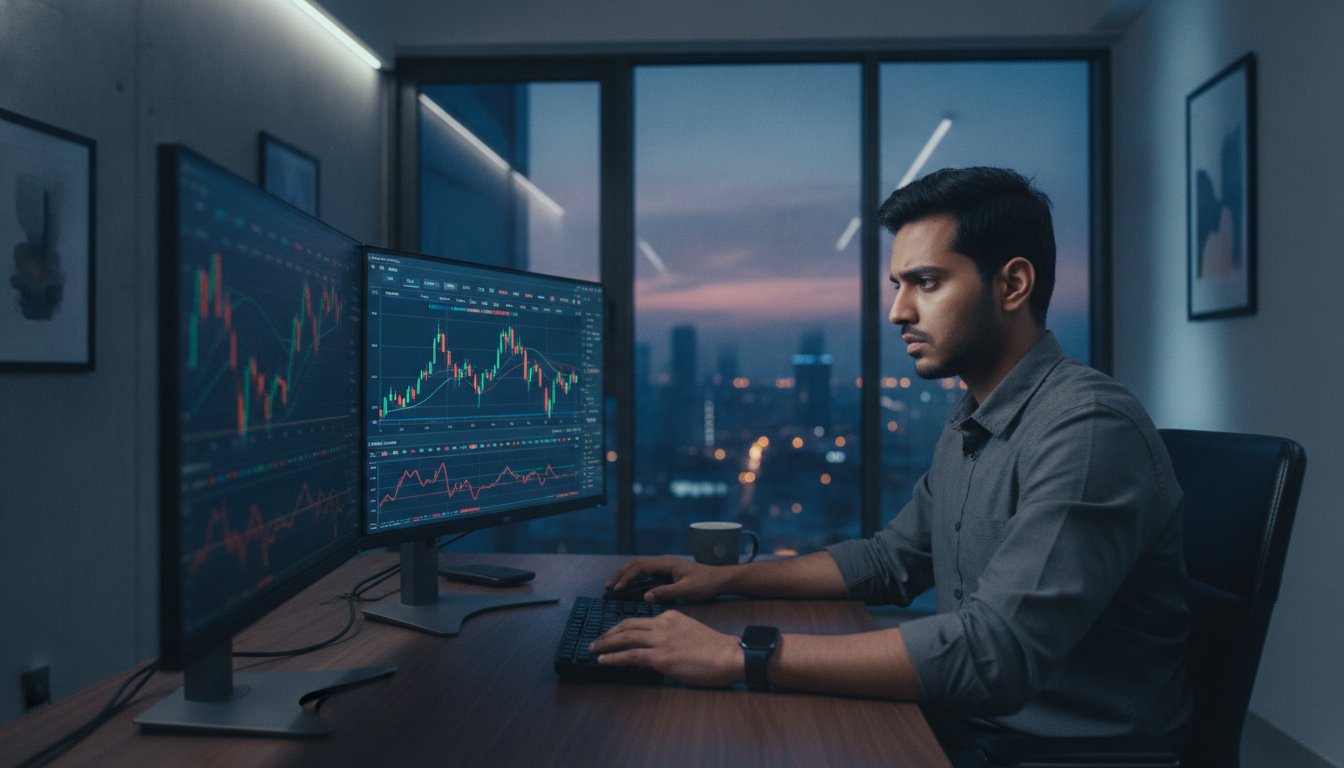
Why do nine out of ten retail F&O traders in India lose their capital despite having access to the same technical indicators as the pros? It's because static charts are a finished story. They show you the "what" but never the "how." You've likely felt that paralyzing hesitation when the Nifty 50 moves against you, or watched your hard earned ₹15 lakh margin evaporate because a strategy that looked perfect on a weekend didn't survive the 3:40 PM close. Trading isn't about reading; it's about reacting. Mastery is a result of practice rather than luck.
We agree that losing money while "learning" is a recipe for disaster. This article will show you how to replicate real trading environment standards from your own desk, transforming historical data into a live-fire training ground. You'll learn to forge instinctual muscle memory and verify your strategies against the market's true volatility without risking a single rupee. When you replicate real trading environment dynamics, you uncover the hidden patterns that only appear during the rush of the opening bell. We'll walk through the process of replaying NSE sessions, marking levels for the next day, and building the disciplined mindset required to trade with professional-level precision. It's time to replicate real trading environment sessions to stop guessing and start training.
Key Takeaways
- Escape the trap of hindsight bias by understanding why static charts fail to prepare you for the live market's pressure.
- Discover how to replicate a real trading environment at home using tick-by-tick historical data and variable speed controls.
- Master the "Opening Bell" drill to navigate the first 30 minutes of NSE volatility with calm, professional confidence.
- Learn the "Z-preparation" philosophy to turn yesterday's market action into a roadmap for tomorrow's success.
- Build instinctual muscle memory for entries and exits by replaying exact price movements from previous high-stakes sessions.
Table of Contents
- The Illusion of Certainty: Why Static Charts Fail Traders
- Anatomy of a Professional Trading Environment
- How to Replicate the NSE Market Environment at Home
- Drills for Mastery: Building Trading Muscle Memory
- Master the NSE with 1paisaa: Your Professional Replay Partner
The Illusion of Certainty: Why Static Charts Fail Traders
A static chart is a finished story. When you look at yesterday's Nifty 50 movement, the entries seem obvious and the reversals look telegraphed. This is the hindsight bias trap. It tricks your brain into believing that trading is a simple game of pattern recognition. In reality, a static chart removes the most volatile variable: time. You see the result, but you don't feel the three minutes of agonizing consolidation before the breakout. To truly master the markets, you must replicate real trading environment conditions where the candles haven't formed yet.
The Right-Edge problem is the primary source of trader anxiety. It's the psychological wall where the historical data ends and the unknown begins. On a static chart, there is no right edge; the future is already visible. Replaying a session restores this wall. It forces you to make decisions in the flow of time. Muscle memory isn't built by identifying a Head and Shoulders pattern on a printed page. It's built by seeing that pattern struggle to form while the price ticks up and down, testing your conviction in real-time. There is a profound difference between backtesting a strategy to see if it works and replaying a session to see if you can trade it.
The Psychological Gap in Paper Trading
Traditional practice often relies on a basic stock market simulator to test theories. While these tools are useful for learning mechanics, they often fail to simulate Market Pressure. When you trade with virtual money, your brain knows there is no skin in the game. This leads to reckless risk-taking that you would never attempt with your own ₹15 lakh capital. Standard paper trading fails because it doesn't replicate real trading environment pressures found in the first 30 minutes of the day. Static analysis ignores the sheer speed of the NSE opening bell. Between 9:15 AM and 9:45 AM, price action is a blur. If you haven't practiced at that specific tempo, your strategy will crumble.
From Observation to Execution
Professional athletes don't just study game film; they spend hours in high-fidelity simulators. Pilots don't learn to land by looking at photos of runways. They use simulation to bridge the gap between knowing a maneuver and clicking into action. Trading requires the same evolution. You need to replicate real trading environment sessions to move from observation to instinctual execution. Repetitive exposure to realistic market sessions reduces cortisol levels. It turns a high-stress event into a routine procedure. When you've seen a specific price rejection a hundred times in a simulator, you won't hesitate when it appears on your live terminal. You'll just execute.
Anatomy of a Professional Trading Environment
To replicate real trading environment standards, your setup must mirror the precision of a professional terminal. It isn't enough to have a chart that updates every minute. Intraday success is won or lost in the ticks. High-fidelity, tick-by-tick data remains the gold standard. Many simulators rely on interpolated data, which smooths out the raw price action. This creates a false sense of security. It hides the violent gaps and slippage that occur during high-volume events. If your practice tool doesn't show the exact price jumps, you aren't training for the NSE. You're training for a sanitized version of reality.
A professional environment also demands variable speed control. Think of it as a lens for time. You can slow down a rapid breakout to uncover the subtle footprints of institutional players. You can speed through midday consolidation to keep your focus on high-probability setups. This isn't about shortcuts; it's about efficiency. You must also maintain multi-stock synchronization. Tracking the Nifty index alongside heavyweights like HDFC Bank or ICICI Bank is essential. When you use these tools to replicate real trading environment scenarios, you see the inter-market correlations that drive the Indian market. You need a Clean Slate approach where the outcome is unknown, forcing you to rely on your rules rather than your memory.
The Power of Session Replay
Session replay functions as your personal time machine. It allows you to revisit high-volatility days where banking sector turnover exceeded ₹12,000 crore. These are the sessions that test your nerves. By replaying the first 15 minutes of an NSE session, you build the timing necessary to survive the morning rush. You can pause, analyze the market structure, and reconsider your bias before the next candle prints. This granular review turns yesterday's chaos into a structured learning opportunity, allowing you to see what remains after the noise fades.
Technical Integrity and Data Accuracy
Your indicators must react with surgical precision. If your RSI or VWAP levels don't match the live terminal, your strategy is flawed. Technical integrity ensures that the historical prints are identical to what appeared on institutional screens. A robust Historical NSE Session Replay tool allows you to mark key levels and save your states for future review. When you replicate real trading environment data with 100% fidelity, your confidence follows. Preparation is the only antidote to market uncertainty. By drilling with accurate data, you ensure that your practice is indistinguishable from the real thing.
How to Replicate the NSE Market Environment at Home
To replicate a real trading environment, you must treat your practice with the same gravity as a live session. It starts with a clear objective. You aren't just clicking buttons; you're either stress-testing a specific strategy or drilling your execution speed. Before you begin, select your "Battleground." Choose a historical date known for high volatility, such as a major SEBI policy announcement or a high-volume earnings day for banking heavyweights. This isn't a casual review. It's a mission.
Eliminate every distraction. Silence your phone. Close unrelated browser tabs. If you want to replicate a real trading environment, your physical space must feel high-stakes. Journaling is your post-mission briefing. Log every trade, but don't just record the price. Record your emotional state. Did you feel a spike in cortisol when the price dipped? Did you hesitate to click the button? Review your simulated P&L to find structural flaws in your logic. Success is a result of this methodical repetition.
Setting the Stage for Focus
Your brain needs signals to enter "Professional Mode." Use the same hardware, monitors, and desk layout you use during live NSE hours. The most critical step is "Blind Testing." Select a date range from the past year that you haven't studied recently. If you already know the Nifty finished 2% up, your simulation is compromised. You need the genuine uncertainty of the right edge to build real skill. This creates an atmosphere of calm readiness that carries over to live markets.
Executing the Simulation Session
Start your clock at 9:00 AM. This allows you to simulate the pre-market build-up and the rush of adrenaline that hits at 9:15 AM. Use "Real-Time" speed for your execution drills. This forces you to manage your orders under pressure. If you're practicing pattern recognition, you can toggle to "High-Speed" during midday lulls, but always return to normal speed when a setup nears. Practicing the "Wait" is just as important as the trade itself. If there is no setup, you sit on your hands. Discipline is forged in the lulls, not just the breakouts.
Drills for Mastery: Building Trading Muscle Memory
Trading is a performance sport. You don't read your way to mastery; you drill until the action becomes automatic. To replicate a real trading environment, your practice must move beyond passive observation into active, high-repetition training. These drills are designed to build the muscle memory required to survive the 9:15 AM opening rush and the midday volatility of the Indian markets. Practice isn't about seeing what happened; it's about training your eyes to see what is happening.
- The 'Opening Bell' Drill: Focus exclusively on the first 30 minutes of NSE volatility. Practice managing gap-ups and sudden reversals where price action moves at its highest velocity.
- The 'Trend Continuation' Drill: Identify a trending market and practice entering on pullbacks. Learn to distinguish between a temporary dip and a total trend reversal.
- The 'Stop-Loss' Drill: This is an exercise in ego management. Practice exiting a trade the moment your level is breached. No bargaining. No hoping.
- The 'Multiple Timeframe' Drill: Sync your 5-minute execution chart with the hourly trend. Training your eyes to see the big picture prevents you from getting trapped in minor intraday noise.
Refining Your Entry and Exit Precision
Execution is the bridge between analysis and profit. Practice using limit orders versus market orders during high-momentum moves. In the live NSE market, slippage can eat into your profits instantly. Use your simulation to identify the exact moment a candle confirms your setup before you commit capital. Trade Confirmation is the specific price action signal, such as a candle close above a key level or a volume spike, that validates your entry criteria before you click the button. Master these drills and sharpen your execution with the 1paisaa Simulator.
Developing Emotional Resilience
Fear is the byproduct of uncertainty. If a specific loss on a banking stock felt particularly painful, replay that session ten times. Desensitize yourself to the outcome and focus entirely on the process. This repetition turns a frantic reaction into a calm, professional response. You will learn to handle the recovery by immediately looking for the next valid setup after a simulated loss rather than dwelling on the past. To replicate a real trading environment is to accept that losses are just data points. Mastery is the result of what remains after you have stripped away the fear of being wrong.
Master the NSE with 1paisaa: Your Professional Replay Partner
1paisaa isn't just a charting tool. It's the definitive "Flight Simulator" for the Indian retail trader. While generic global platforms offer broad market data, 1paisaa is built specifically for the nuances of the National Stock Exchange. To replicate a real trading environment, you need more than just a line on a screen. You need the exact price levels and timing from historical NSE sessions. Our 1paisaa Simulator provides 100% data fidelity. This ensures that every tick you see in practice is identical to what occurred in the live market.
The platform features an Intraday Preparation Tool designed for the disciplined strategist. You can mark your levels, set your bias, and then launch a Historical NSE Session Replay to see if your plan holds water. This is where theory meets reality. You aren't just looking at what happened; you're uncovering the "why" behind every move. Preparation is the only antidote to the chaos of live market hours.
The 1paisaa Methodology: Prepare, Replay, Perform
Our methodology bridges the gap between static backtesting and high-stakes execution. Backtesting tells you if a strategy works on paper. Replaying tells you if you can execute it under pressure. The 1paisaa environment is cinematic and focused. It is stripped of the frantic noise that leads to analysis paralysis. We value preparation over impulse. By adopting the "Z-preparation" philosophy, you prepare for tomorrow by reliving the volatility of the past. You join a community of traders who understand that mastery is a result of deliberate practice, not luck.
Getting Started Today
Launching your first session is a straightforward process designed to get you into the market pulse quickly. First, select a stock from our extensive list. We offer a free demo that provides access to 50 stocks over three past sessions. This allows you to test the interface without any initial cost. Once you launch the replay, use the variable speed controls to uncover hidden market patterns that are invisible on static charts. Watch how the price reacts at your marked levels. Adjust your logic. Repeat the process until your entries become instinctual.
Success in the Indian markets requires more than just capital; it requires a conditioned mind. You can start building that edge right now. Practice intraday trading without the risk; Try 1paisaa for free today and see how it feels to replicate a real trading environment before you ever place a live trade.
Forge Your Edge Before the Market Opens
The gap between a retail trader and a professional strategist is measured in preparation. You now understand that static charts only tell half the story. To truly master the Indian markets, you must move beyond observation and into the flow of time. By using high-fidelity historical data to replicate a real trading environment, you transform the anxiety of the unknown into the confidence of a routine. You've seen how specific drills for the opening bell and trend continuations build the muscle memory required to survive the NSE's most volatile sessions.
Success isn't found in luck; it's found in the work you do when the market is closed. You have the tools to analyze the past and chart your path for tomorrow with surgical precision. Our platform provides historical NSE data with exact price levels and a dedicated intraday preparation tool to help you stay ahead of the curve. Don't let your next live trade be a guessing game.
Stop guessing and start preparing; Try the 1paisaa Simulator for free and explore our demo featuring 50 top stocks. The market rewards the disciplined. It's time to become one of them.
Frequently Asked Questions
Can I practice intraday trading without losing real money?
Yes, you can practice intraday trading without risking your capital by using a high-fidelity simulator. This allows you to test complex strategies and build muscle memory in a completely risk-free setting. Instead of losing your hard-earned ₹15 lakh margin during the learning phase, you use historical data to refine your skills. It's the most effective way to gain experience without the financial sting of early mistakes that often wipe out new traders.
How does a trading simulator replicate a real market environment?
A professional simulator uses tick-by-tick historical data to replicate a real trading environment with surgical precision. It doesn't just show static charts; it replays the actual flow of price action as it happened in the past. You experience the same volatility, speed, and "right-edge" uncertainty found in live markets. This setup forces you to make decisions in real-time, bridging the gap between theoretical knowledge and instinctual execution.
Is 1paisaa's data accurate to the real NSE market movements?
Yes, 1paisaa provides 100% data fidelity by using exact price levels and timing from historical NSE sessions. Every candle, volume spike, and price rejection you see in the simulator is an identical match to what occurred on professional terminals. This technical integrity ensures that your indicators, such as VWAP or RSI, react exactly as they would during live trading hours, providing a realistic and reliable training ground.
How many sessions can I replay on the free version of 1paisaa?
The free version of the 1paisaa Simulator allows you to replay three past sessions across 50 different stocks. This initial access is designed to help you familiarize yourself with the interface and the "Z-preparation" philosophy. It's a risk-free way to test the platform's speed controls and data accuracy before committing to a deeper training regimen. You can start drilling your entries and exits immediately without any upfront cost.
Can I use 1paisaa to prepare for the next trading day?
Yes, you can use the specialized Intraday Preparation Tool to chart your path for the upcoming session. This feature allows you to mark key support and resistance levels, define your bias, and save your setup. By replaying the most recent sessions, you gain a deeper understanding of current market structure. You enter the live market with a pre-defined plan rather than reacting blindly to the opening bell adrenaline.
Do I need a high-end computer to run a trading simulator at home?
No, you don't need an expensive, high-end workstation to run the 1paisaa Simulator. Most modern laptops or desktop computers with a stable internet connection can handle the session replay smoothly. Since the processing happens efficiently on our end, you can focus on your charts and execution without worrying about technical lag. A clean, distraction-free setup is far more important for your professional growth than a high-cost hardware array.
How long should I practice in a simulator before going live?
You should practice until your execution becomes automatic and your strategy shows consistent results over multiple historical sessions. Most disciplined traders spend weeks or months in a simulator to replicate a real trading environment and build emotional resilience. The goal is to reach a stage where you no longer feel a spike in cortisol when a trade goes against you. Transition to live trades only when your simulated P&L reflects mastery.
Can I replay Bank Nifty and Nifty 50 sessions on 1paisaa?
Yes, replaying major indices like Nifty 50 and Bank Nifty is a core feature of the platform. These sessions are vital for understanding the broader market pulse and the impact of banking sector turnover on intraday moves. You can synchronize these index movements with individual stocks on your watchlist. This multi-chart capability ensures you're practicing with the same inter-market correlations that professional Indian traders monitor during every live session.
Questions
Can I practice intraday trading without losing real money?
Yes. Using a dedicated simulator allows you to trade with virtual capital while experiencing real market conditions. This environment removes financial risk while you refine your strategy. It's the most effective way to build confidence before committing your actual capital to the live NSE market. Practice here turns potential losses into valuable lessons without affecting your bank balance.
How does a trading simulator replicate a real market environment?
A professional simulator uses tick-by-tick historical data to recreate the exact price movements of a past session. To truly replicate a real trading environment, the software must synchronize the index with individual stocks. This ensures that every candle and price flicker matches what happened on the actual trading floor, allowing for authentic practice that builds genuine muscle memory.
Is 1paisaa's data accurate to the real NSE market movements?
Yes, 1paisaa provides 100% data fidelity by using exact price levels and timing from historical NSE sessions. Unlike basic platforms that use smoothed or interpolated data, this simulator replays every tick. You see the same volatility and price action that live traders faced during that specific session. This precision is what allows for professional-grade strategy verification.
How many sessions can I replay on the free version of 1paisaa?
The free demo version of 1paisaa allows you to replay three past sessions. This trial includes access to 50 top NSE stocks, giving you a clear opportunity to test the platform's high-fidelity features. It's designed to let you experience the "time machine" effect before deciding to explore the full library of historical market data and advanced drilling tools.
Can I use 1paisaa to prepare for the next trading day?
Yes. The Intraday Preparation Tool is specifically designed to help you mark key levels for the upcoming session. By replaying the most recent sessions, you can observe how price interacted with support and resistance zones. This "Z-preparation" strategy ensures you enter the live market with a clear roadmap and predefined levels, reducing mid-day analysis paralysis.
Do I need a high-end computer to run a trading simulator at home?
No, most modern simulators are designed to run efficiently on standard consumer hardware. While a stable internet connection is vital for downloading historical data, you don't need a professional-grade workstation. A standard laptop or desktop that can handle basic charting software is usually sufficient to replicate a real trading environment in your own dedicated study space.
How long should I practice in a simulator before going live?
You should practice until your execution becomes instinctual and your strategy shows consistent results over multiple sessions. Most professional mentors suggest drilling for at least a few weeks to build necessary muscle memory. The goal is to move from the simulator to live trades only when you can handle volatility without emotional interference or hesitation.
Can I replay Bank Nifty and Nifty 50 sessions on 1paisaa?
Yes, 1paisaa supports historical session replays for major indices like Nifty 50 and Bank Nifty. You can observe the index movement alongside individual stocks to understand market correlation. This multi-stock synchronization is essential for mastering intraday setups that depend on broader market trends and index-weighted price action. It provides a holistic view of the market pulse.