Master Intraday Trading Discipline: The Ultimate 2026 Checklist for NSE Success
Learn to master intraday trading discipline with our ultimate 2026 checklist. Stop emotional trading and build a system for consistent success on the NSE.
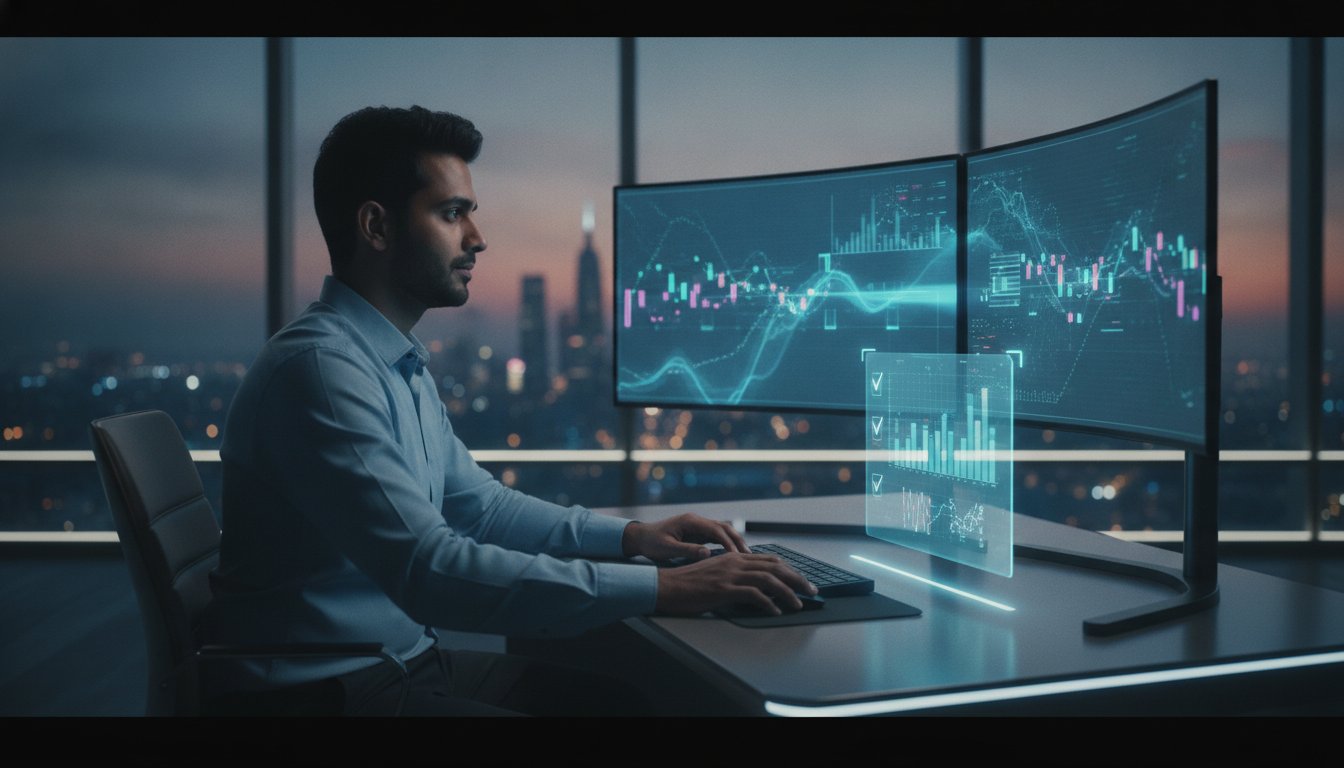
Why does a rational trader with a backtested strategy suddenly click "buy" on a vertical spike they promised to avoid? It's the silent killer of NSE accounts: the gap between knowing what to do and actually doing it when the volatility hits. You've felt that surge of adrenaline as Nifty swings. You've watched your hard-earned profits vanish because of one "stupid" trade that felt right in the heat of the moment. It's exhausting to feel out of control when the market moves against you.
To truly master intraday trading discipline, you don't need more willpower; you need a better system. We're moving past the "just be disciplined" advice to explore the neurological and tactical framework that builds professional-grade execution habits. This guide delivers the ultimate 2026 checklist to eliminate impulsive trading and replace anxiety with calm readiness. We'll break down the specific preparation routines and simulation drills that transform the way you interact with the live tape. You'll learn to slow the market down, uncover your emotional triggers, and build the muscle memory required for consistent success.
Key Takeaways
- Identify the biological triggers that cause irrational decisions during Nifty volatility to regain control of your execution.
- Master intraday trading discipline by applying a 5-pillar framework that prioritizes preparation over impulse.
- Follow a time-blocked 2026 checklist to build a professional routine that starts long before the opening bell.
- Use the 1paisaa Simulator to replay historical market sessions; it's the most effective way to practice execution and observe emotional triggers safely.
Table of Contents
- The Psychology of Intraday Discipline: Why Your Brain Betrays You
- The 5-Pillar Framework for NSE Trading Discipline
- Strategy vs. Execution: Bridging the Gap with Simulation
- The Master Intraday Discipline Checklist (2026 Edition)
- How 1paisaa Simulator Forges Professional Habits
The Psychology of Intraday Discipline: Why Your Brain Betrays You
Your brain isn't built for the modern ticker. Evolution designed you to survive predators, not rapid swings in the Nifty 50. When you engage in day trading, you enter a high-stakes environment where primitive biology clashes with mathematical logic. To master intraday trading discipline, you must first acknowledge that your hardware is outdated. The Amygdala Hijack is a real, biological event. It's the moment fear or greed overrides your prefrontal cortex. Your strategy exists in the logical mind; however, under pressure, the lizard brain takes the wheel. Technical analysis fails when you lose the ability to think clearly.
Then there's the Dopamine Trap. Every small tick in your favor releases a chemical reward. It feels like a win. This makes you crave the next trade, regardless of whether a high-probability setup exists. This cycle leads to overtrading, the most common path to ruin for retail participants. You stop being a strategist and start being a gambler. You chase the high instead of the edge. Professionalism begins when you stop reacting to the screen and start managing your internal state.
Understanding the Emotional Cycle of a Trade
Most traders move through a predictable, destructive loop. The Euphoria Phase is often the most dangerous. A winning streak convinces you that you've "solved" the market. You increase position size, ignore stops, and invite disaster. When the inevitable loss hits, you enter the Desperation Phase. This is where revenge trading lives. You try to "get it back" from the market as if it owes you a debt. Breaking this cycle requires conscious observation. You must learn to step back and watch your emotions as if they belong to someone else. Control the person, and the P&L follows.
Neuroplasticity and the Traders Mind
Your brain is plastic. You can rewire it for patience and objectivity. Professionalism is built through high-frequency practice away from the live market. You can improve trading psychology with simulation by exposing yourself to market stress without the financial penalty. This repetitive exposure trains your nervous system to stay calm during NSE volatility. Trading Discipline is the ability to execute a plan under pressure. By using historical session replay to relive difficult days, you turn deliberate action into an automated reflex. You move from impulse to cold, professional execution.
The 5-Pillar Framework for NSE Trading Discipline
Discipline isn't a state of mind. It's a structural byproduct of your environment. To master intraday trading discipline, you must build a fortress of rules that protect you from your own impulses. Without a framework, you're just a passenger in the market's volatility. Professionalism requires five non-negotiable pillars that dictate every action from the pre-market session to the final bell.
- Pillar 1: Pre-Market Preparation. Stop chasing headlines. Start marking levels. The market reacts to liquidity zones, not news anchors. Professional preparation means knowing your "if-then" scenarios before 09:15 AM.
- Pillar 2: Fixed Risk-Per-Trade. This is your shield against ruin. Decide on a fixed percentage or rupee amount you're willing to lose. If the market hits that number, the trade is over. No exceptions.
- Pillar 3: Entry Protocols. Patience is the ultimate edge. You only enter when every criteria of your "A+" setup is met. If the setup isn't there, you don't trade.
- Pillar 4: Exit Discipline. The trade ends at your target or your stop. Mid-trade negotiations are the enemy of consistency. Trust your initial analysis.
- Pillar 5: Post-Market Review. The audit builds the expert. Reviewing your trades helps you uncover patterns in your behavior that the live market hides.
Defining Your "A+" Setup
Too many strategies create noise. Decision fatigue is the primary reason traders break their rules. You need one clear, visual setup that you can identify in seconds. Focus on mastering a single pattern on the NSE until it becomes second nature. It's vital to spend time validating trading strategies without risk using historical data. When you know a setup works over 100 sessions, you'll find the courage to wait for it during the live session. Using an Intraday Preparation Tool can help you visualize these levels before the pressure mounts.
The Mathematics of Discipline
Discipline is a numbers game. You don't need to be right every time to be profitable. A 40% win rate is a gold mine if your risk-reward ratio is 1:2. However, breaking discipline on just one trade can ruin the math of your entire month. The psychology of trading discipline explains why our brains struggle with loss aversion. We want to hold losers and cut winners. Discipline forces you to do the opposite. It aligns your actions with the long-term equity curve rather than the short-term emotional spike.
Strategy vs. Execution: Bridging the Gap with Simulation
Knowing a strategy is an intellectual exercise. Executing it while the Nifty 50 swings 200 points is a physical one. This is the gap where most retail participants fail. You can study charts for years, but until you've faced the ticking clock of a live session, you don't know your own triggers. To master intraday trading discipline, you must move from intellectual understanding to physical reflex. You must treat your craft like flight training. Pilots don't wait for a storm to practice emergency landings; they use simulators.
Paper trading often fails because it lacks urgency. It feels like a video game with no consequences. NSE session replay, however, creates a high-fidelity environment where you can witness price action exactly as it happened. By using high-speed replay, you can observe 100 setups in the time it takes for a single live session to unfold. You aren't just looking at static data. You're training your eyes to see the market's hidden layers in real-time. You're uncovering the difference between a random spike and a genuine breakout.
Building Muscle Memory with Session Replay
Repetition breeds instinct. The 10,000 repetitions rule applies to the trading desk just as it does to the athlete. The 1paisaa Simulator provides the platform for this level of deliberate practice. It forces you to confront the "No-Trade" scenario. This is the ultimate test of discipline. Can you watch a choppy, sideways session for 30 minutes without clicking "buy"? If you can't do it in simulation, you'll never do it with real capital. Simulation turns "doing nothing" into a conscious, professional choice rather than a missed opportunity.
Stress-Testing Your Discipline
True discipline is forged in the fire of volatility. Simulating extreme events, like Budget Days or sudden global crashes, allows you to stress-test your emotional regulation. You learn to stay calm when the tape speeds up. You learn to trust your levels when the noise gets loud. Using backtesting software for NSE provides the mathematical anchor you need. When you've seen your strategy survive 500 simulated trades, the live market loses its power to scare you. You stop guessing. You start executing. This is how you master intraday trading discipline for the long term.
The Master Intraday Discipline Checklist (2026 Edition)
Success on the NSE isn't found in a magic indicator. It's found in the ritual. To master intraday trading discipline, you must treat your day as a series of tactical phases. Professionals don't wake up and hope for the best; they execute a predetermined sequence of actions that remove the need for mid-market guesswork. This checklist is your daily battle plan to ensure you remain the strategist, not the gambler.
- 08:30 AM: The Preparation Phase. Analyze global cues and GIFT Nifty sentiment. Identify the day's "Environment." Is the market trending or sideways?
- 09:15 AM: The Opening Bell. Implement the "Hands-Off" rule. Avoid the first 15 minutes of volatility where price discovery is most erratic.
- 12:30 PM: The Mid-Day Audit. Step away from the screen for ten minutes. Check your emotional temperature. If you're feeling anxious or euphoric, stop trading.
- 03:15 PM: The Exit Protocol. Close all intraday positions. Reject the "just five more minutes" syndrome that turns a disciplined trade into a risky overnight gamble.
- 06:00 PM: The Evening Replay. Load your trades into a simulator. Replay the session to see where you followed the plan and where impulse took over.
Pre-Market Checklist: Your Daily Battle Plan
Your edge is sharpest before the market opens. Marking critical support and resistance levels using an intraday preparation tool is your first act of defiance against impulse. You must set a maximum daily loss limit and commit to it with absolute finality. If that limit is hit, you close your terminal. No exceptions. This preparation transforms the market from a chaotic landscape into a series of predictable "if-then" scenarios. When price hits your level, you don't think; you execute.
During-Market Checklist: Managing the Self
The screen is a mirror of your internal state. To maintain control, adopt the "Three-Deep-Breaths" rule before clicking "Buy" or "Sell." This brief pause re-engages your logical mind. You must also remove all external noise. Close social media, mute trading groups, and ignore the frantic energy of news cycles. Record every trade in a journal immediately after execution. Note the setup, the entry, and most importantly, your emotional state. This record becomes the evidence you need to refine your behavior. Start building your professional routine today by using the 1paisaa Historical NSE Session Replay to practice these habits without financial risk.
How 1paisaa Simulator Forges Professional Habits
Discipline is the child of repetition. You don't master intraday trading discipline by reading about it. You do it by reliving the market's most difficult moments. The 1paisaa Simulator is designed for this specific purpose. It offers a high-fidelity replay of the last three sessions for any of the top 50 NSE stocks. This isn't a static chart. It's a living, breathing environment. You can slow down the tape to see how price action unfolds at a granular level. This allows you to observe your own emotional reactions before they lead to a mistake. You can pause, reflect, and uncover the hidden patterns in the tape that you missed during the live session.
A stock market simulator India is the essential bridge to profitability. It provides the "flight hours" needed to move from a retail mindset to a professional one. You can start with the "Try Free" entry point to immediately begin training your execution habits. By removing financial risk, you focus entirely on the process. The result is a calm, ready mind when the live market opens. You stop reacting to the noise. You start responding to the signal. You learn to value the quality of your execution over the outcome of a single trade.
Features Designed for Disciplined Prep
Precision requires detail. The simulator provides tick-by-tick replay, ensuring your entry and exit practice is as realistic as possible. You can save your preparation levels and compare your pre-market analysis with the actual market movements. This feedback loop is vital. It shows you exactly where your vision was clear and where you were blinded by bias. Multi-stock analysis further sharpens your focus. It helps you reduce FOMO by teaching you to wait for the best setup across a variety of instruments like Reliance or HDFC Bank. You learn to see the market as a whole, rather than chasing a single ticker in isolation.
Your Path to Mastery Starts Today
Habits aren't built in an afternoon. Moving from a demo to full data access allows for comprehensive, deep-level training. We recommend a 21-day simulation challenge. Spend 30 minutes every evening replaying a session. Focus only on execution. Don't worry about the hypothetical profit. Worry about the plan. If you follow your rules for 21 days in simulation, you'll find it significantly easier to follow them in the live session. The simulator turns the abstract concept of discipline into a tangible skill. It prepares you for the high-stakes environment of the NSE by making professional execution your default setting.
Start your free NSE simulation session on 1paisaa now.
Step Into the Arena of Professional Execution
The path to consistency on the NSE isn't paved with more indicators; it's built on the foundation of a hardened mind. You now understand that the amygdala hijack is a biological reality and that a structured 5-pillar framework is your only defense against it. By following the 2026 checklist, you move from the chaos of impulse to the clarity of a strategist. True mastery comes when you treat every session as a deliberate practice of your rules rather than a gamble on the next candle.
It's time to bridge the gap between knowing your strategy and executing it under pressure. You can master intraday trading discipline by leveraging high-fidelity tools that simulate the heat of the market. With Exact NSE Price Replay in a Risk-Free Environment, you build the muscle memory used by the most disciplined intraday strategists. Don't leave your success to luck when you can build it through repetition. Master Your Discipline with 1paisaa NSE Simulator. The market rewards the prepared; start your training today.
Frequently Asked Questions
What is the most important rule for intraday trading discipline?
The single most critical rule is having a fixed, non-negotiable risk limit per trade. This rule acts as your ultimate shield against financial ruin. Before you enter any position on the NSE, you must know exactly where your stop-loss sits and what rupee amount you're willing to lose. If the market hits that level, you exit immediately. Protecting your capital is the only way to ensure you can return to trade another day.
How can I stop overtrading in the NSE market?
You can stop overtrading by setting a hard limit on the number of trades you take per session. Most successful strategists limit themselves to two or three high-quality setups. Once you reach that limit, or hit your daily loss cap, you must close your terminal. Overtrading is often a result of chasing the dopamine high of a win or the desperation of a loss. Stepping away forces your logical mind to regain control.
Can trading simulators actually improve my psychology?
Yes, simulators are highly effective for psychological training because they allow for high-frequency repetition without financial stress. When you use a tool like the 1paisaa Simulator, you're building the muscle memory required to stay calm during real-time volatility. By replaying difficult market sessions, you train your brain to recognize setups and execute rules as a reflex. This process helps you master intraday trading discipline by reducing the fear of the unknown.
How much time should I spend on session replay every day?
Dedicate 30 to 60 minutes each evening to deliberate practice via session replay. This isn't about watching the screen aimlessly; it's about re-trading specific sessions to analyze your decision-making process. Focus on the first 90 minutes of the market open where volatility is highest. This daily ritual ensures that your execution remains sharp. Consistent, short bursts of focused training are more effective for building long-term discipline than occasional marathon sessions.
What should I do if I break my trading discipline?
If you break your rules, stop trading immediately for the rest of the day. Continuing to trade after a lapse in discipline often leads to revenge trading and catastrophic losses. Once you've stepped away, perform an audit of the trade in a simulator to uncover the emotional trigger that caused the lapse. Acknowledge the mistake without self-judgment, reset your mindset, and commit to following your checklist during the next session.
Is it possible to master discipline without losing real money first?
It's absolutely possible to build professional-grade execution habits without risking your capital. Traditional advice suggests that losing money is a "tuition fee," but simulation has changed that reality. By using historical NSE session replay, you can face the same price action and pressure as a live session. This allows you to master intraday trading discipline by making your mistakes in a safe environment. You arrive at the live market with proven confidence.
How do I handle the fear of missing out (FOMO) during a fast move?
Handle FOMO by reminding yourself that a fast move without your specific "A+" setup is not your trade. Professionalism is about waiting for the market to meet your criteria, not chasing the market's momentum. If you miss a move, let it go. There will always be another opportunity in the next session. Use your preparation levels to stay grounded. If the price isn't at your level, there is no action to take.
Why is pre-market preparation linked to intraday discipline?
Pre-market preparation reduces the number of decisions you have to make while the clock is ticking. When you've already marked your levels and defined your "if-then" scenarios, you remove the need for impulse. Discipline is easier to maintain when you're simply executing a plan you created in a calm state. Without a battle plan, you're forced to react to every tick, which quickly leads to emotional exhaustion and poor decision-making.
Questions
What is the most important rule for intraday trading discipline?
The single most critical rule is having a fixed, non-negotiable risk limit per trade. This rule acts as your ultimate shield against financial ruin. Before you enter any position on the NSE, you must know exactly where your stop-loss sits and what rupee amount you're willing to lose. If the market hits that level, you exit immediately. Protecting your capital is the only way to ensure you can return to trade another day.
How can I stop overtrading in the NSE market?
You can stop overtrading by setting a hard limit on the number of trades you take per session. Most successful strategists limit themselves to two or three high-quality setups. Once you reach that limit, or hit your daily loss cap, you must close your terminal. Overtrading is often a result of chasing the dopamine high of a win or the desperation of a loss. Stepping away forces your logical mind to regain control.
Can trading simulators actually improve my psychology?
Yes, simulators are highly effective for psychological training because they allow for high-frequency repetition without financial stress. When you use a tool like the 1paisaa Simulator, you're building the muscle memory required to stay calm during real-time volatility. By replaying difficult market sessions, you train your brain to recognize setups and execute rules as a reflex. This process helps you master intraday trading discipline by reducing the fear of the unknown.
How much time should I spend on session replay every day?
Dedicate 30 to 60 minutes each evening to deliberate practice via session replay. This isn't about watching the screen aimlessly; it's about re-trading specific sessions to analyze your decision-making process. Focus on the first 90 minutes of the market open where volatility is highest. This daily ritual ensures that your execution remains sharp. Consistent, short bursts of focused training are more effective for building long-term discipline than occasional marathon sessions.
What should I do if I break my trading discipline?
If you break your rules, stop trading immediately for the rest of the day. Continuing to trade after a lapse in discipline often leads to revenge trading and catastrophic losses. Once you've stepped away, perform an audit of the trade in a simulator to uncover the emotional trigger that caused the lapse. Acknowledge the mistake without self-judgment, reset your mindset, and commit to following your checklist during the next session.
Is it possible to master discipline without losing real money first?
It's absolutely possible to build professional-grade execution habits without risking your capital. Traditional advice suggests that losing money is a "tuition fee," but simulation has changed that reality. By using historical NSE session replay, you can face the same price action and pressure as a live session. This allows you to master intraday trading discipline by making your mistakes in a safe environment. You arrive at the live market with proven confidence.
How do I handle the fear of missing out (FOMO) during a fast move?
Handle FOMO by reminding yourself that a fast move without your specific "A+" setup is not your trade. Professionalism is about waiting for the market to meet your criteria, not chasing the market's momentum. If you miss a move, let it go. There will always be another opportunity in the next session. Use your preparation levels to stay grounded. If the price isn't at your level, there is no action to take.
Why is pre-market preparation linked to intraday discipline?
Pre-market preparation reduces the number of decisions you have to make while the clock is ticking. When you've already marked your levels and defined your "if-then" scenarios, you remove the need for impulse. Discipline is easier to maintain when you're simply executing a plan you created in a calm state. Without a battle plan, you're forced to react to every tick, which quickly leads to emotional exhaustion and poor decision-making.