Improve Trading Psychology with Simulation: The Science of Forging Discipline
Forge elite discipline and stop emotional losses. This guide shows how to improve trading psychology with simulation, turning market volatility into your tra...
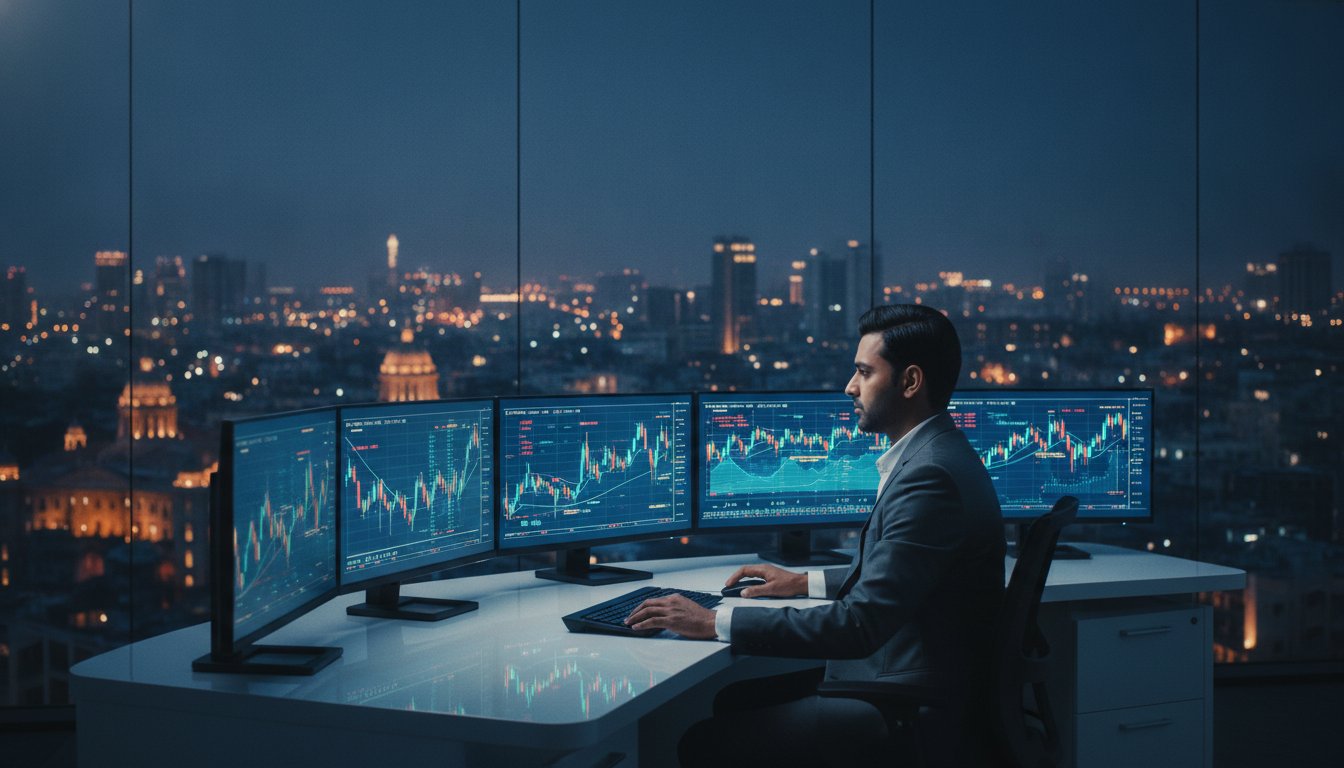
Discipline isn't a personality trait you're born with. It's a neurological reflex you build through repetition. If you've ever watched a Nifty reversal wipe out your gains while you sat paralyzed, you already know the truth. To improve trading psychology with simulation, you must stop viewing the market as a gamble and start treating it as a training ground. You've likely felt that post-market regret after seeing a missed opportunity that was obvious in hindsight. You don't lack intelligence. You lack the sensory familiarization required to stay calm when the candles move fast.
We agree that your backtested data is solid, yet your execution remains inconsistent. This article explores the science of using high-fidelity session replay to rewrite your emotional response to volatility. You'll learn how to treat historical NSE sessions as a flight simulator for your mind. Practice here, and you will lower your heart rate during intense live sessions. Master the replay, and you will transition from impulsive guessing to mechanical execution. We're moving beyond theory. We're building the muscle memory of a professional strategist.
Key Takeaways
- Move beyond the willpower myth. Understand how neuroplasticity turns your trading strategy into a physical reflex.
- Learn how to improve trading psychology with simulation by removing hindsight bias and facing the uncertainty of the next candle.
- Master the ability to "slow down time" during volatile NSE sessions to observe and rewire your emotional triggers.
- Use tactical drills like the "Freeze-Frame" and "Speed-Up" techniques to transform hesitation into calm, mechanical execution.
- Build a "Playbook of Certainty" by replaying historical NSE data in a risk-free laboratory environment.
Table of Contents
- The Myth of Willpower: Why Reading About Psychology Isn’t Enough
- Rewiring the Trader’s Brain Through High-Fidelity Simulation
- Static Charts vs. Session Replay: Bridging the Emotional Gap
- Tactical Simulation Drills to Conquer Fear and Greed
- 1paisaa: Your Laboratory for Professional Psychological Mastery
The Myth of Willpower: Why Reading About Psychology Isn’t Enough
Trading psychology is the bridge between a strategy and its execution. It's the silent force that dictates whether you follow your plan or abandon it the moment Nifty spikes. Most traders treat discipline as a character trait. They believe they can simply "will" themselves into being patient. This is the willpower myth. It leads directly to burnout and repetitive losses. You study on weekends, promise to do better on Monday, and then watch your resolve crumble by the 9:15 AM candle. You can't solve a biological problem with a logical promise. To improve trading psychology with simulation, you must move beyond the books and enter the laboratory.
Simulation is the only way to safely trigger and then neutralize emotional responses without paying the market's heavy financial tuition.
The Amygdala Hijack: Why Your Brain Sabotages Your Trades
When you see a sudden red candle, your brain doesn't see a price movement. It sees a threat. This triggers the amygdala, the primitive part of your brain responsible for the fight or flight response. This biological hijack effectively shuts down your prefrontal cortex. That's the area responsible for rational decision making and logic. Suddenly, your vision narrows. You feel the physical weight of cortisol flooding your system. You aren't trading anymore; you're surviving. In this state, your backtested strategy doesn't matter. You either freeze or you flee. High-fidelity simulation acts as exposure therapy. It exposes you to these triggers in a controlled setting until the danger signal is replaced by a professional observation.
From Theoretical Knowledge to Neurological Reflex
Knowing a pattern exists on a static chart is useless if you can't trade it in real time. On a historical chart, the right side is already revealed. There is no uncertainty. There is no fear. Real trading happens in the void of the next candle. This is where you need synthetic experience. By using a Stock market simulator to replay intraday sessions, you build professional grade grit through repetition. You train your eyes to see the setup and your hand to execute without the interference of the ego. Building a consistent stock market simulator India habit turns your strategy into a neurological reflex. You don't choose to be disciplined. You simply act. This is how you improve trading psychology with simulation. You stop thinking and start responding.
Rewiring the Trader’s Brain Through High-Fidelity Simulation
Neuroplasticity is your greatest edge. It's the brain's biological ability to reorganize itself by forming new neural connections. When you improve trading psychology with simulation, you aren't just learning a skill; you're physically reshaping your response to stress. Repetitive simulation forces the brain to build a "mental map" of market structures. This map allows you to recognize shifting trends before they trigger a panic response. You move from conscious struggle to subconscious mastery. Mastery isn't a gift. It's a result of high-frequency training.
One of the most effective ways to build this map is by "Slowing Down Time." During a live NSE session, price action can feel like a blur of noise. By using historical replay, you can slow the movement down to 0.5x or 0.25x speed. This allows you to observe your own emotional triggers as they happen. You see the exact tick that causes your hand to hover over the "sell" button. You identify the moment greed overrides your profit target. By seeing your strategy play out 100 times in replay, you accumulate "Confidence Capital." This capital is the psychological reserve you draw upon when the live market gets volatile.
Building Synthetic Experience Without Financial Risk
Think of simulation as "flight hours" for your trading career. A pilot doesn't take command of a commercial jet after ten hours of reading. They spend hundreds of hours in a simulator, facing engine failures and storms without ever leaving the ground. Your trading should be no different. 1,000 hours of focused simulation beats 10 hours of live market chaos every time. It's about density. In a single hour of replay, you can experience a week's worth of setups. The 1paisaa Simulator provides a safe environment to "fail fast." You can audit your emotional leaks, refine your entries, and crash your "plane" without losing a single rupee. If you want to accelerate your growth, you can try the free demo with 50 stocks today.
Neutralizing the Fear of Volatility
Sudden price swings in Nifty often trigger a "gambler" mindset. You start hoping rather than calculating. High-fidelity simulation neutralizes this fear through desensitization. When you've seen a 2% gap-down replayed fifty times, the fifty-first time in the live market feels routine. This is the "Observer Effect." By replaying a session, you remove your ego from the trade. You stop caring about being "right" and start focusing on being "accurate." Consistent drills turn the chaotic into the predictable. You stop reacting to the noise. You start executing the plan. This transition from gambler to strategist is the hallmark of professional psychological mastery.
Static Charts vs. Session Replay: Bridging the Emotional Gap
Looking at a static chart is like reading a mystery novel after someone has already told you the ending. The tension is gone. You see the breakout, the retest, and the rally. It looks effortless. This is the "Hindsight Bias" trap. Your brain convinces you that you would have caught that move. In reality, you weren't there for the three red candles that shook out the weak hands before the surge. To improve trading psychology with simulation, you must replace these frozen images with living price action. Dynamic replay is the only tool that preserves the "Uncertainty of the Next Candle." It forces you to make decisions without knowing the outcome.
Traditional backtesting software for NSE often focuses on data validation. It tells you if your strategy works on paper. It does not tell you if you can handle the "Tick-by-Tick" struggle. Seeing a candle "Close" green is one thing. Watching it fluctuate between red and green for five minutes while your P&L swings is another. Simulation exposes greed and fear in ways a static chart never can. When you see a profit target nearly hit before the price reverses, greed whispers to you to hold for just one more tick. Static data doesn't capture that whisper. High-fidelity replay captures the struggle. It forces you to confront the urge to hope when the data says exit.
Why Traditional Backtesting Fails Your Mindset
Data validation isn't psychological validation. Static charts hide the very things that break a trader's spirit: the drawdowns, the sideways chop, and the false starts. Paper trading on static data often leads to overconfidence because you never feel the pressure of time. You don't see the clock ticking toward the 3:30 PM close. You don't feel the weight of a stagnant position. This "synthetic experience" is what separates the professional from the amateur. Amateurs look at what happened. Professionals study how it felt while it was happening. Real discipline requires facing these invisible pressures in a live-action environment.
Reclaiming the Intraday Preparation Edge
True mastery begins before the opening bell. Use an intraday preparation tool to mark your key levels on yesterday's data. Then, replay the session. Test your assumptions. Did your levels hold? Did you hesitate at the entry? This process builds a "pre-market ritual" that centers the mind. You aren't guessing what will happen tomorrow. You are replaying what you have already mastered. This is how you improve trading psychology with simulation. You turn the unknown into the familiar. You arrive at the live session with a calm readiness, knowing you've already seen this movie before.
Tactical Simulation Drills to Conquer Fear and Greed
Discipline isn't a theory; it's a practice. While journaling is a reactive process, simulation is proactive. You don't wait for the live market to punish you to learn a lesson. You seek out the stress in a controlled environment instead. To improve trading psychology with simulation, you must implement specific, repeatable drills that target your emotional weak points. These drills turn abstract concepts like "patience" into tangible, physical skills. By replaying your actual losing trades from the previous week on 1paisaa, you uncover the hidden layer of reality behind your mistakes. You see the hesitation. You see the greed. You see the truth.
The "Freeze-Frame" drill is your primary tool for identifying hesitation. When you feel a physical sensation, such as a tightening in your chest or a sudden urge to click, hit pause. Ask yourself what triggered that feeling. Was it the price movement or a fear of missing out? Similarly, the "Speed-Up" technique trains your brain to recognize patterns at 5x speed. When you return to 1x speed, the live market feels calm and manageable. Finally, the "Zero-P&L" drill forces you to hide the monetary outcome and focus entirely on execution quality. You'll find that when the money disappears, the discipline remains. You can start practicing these drills today to build your professional edge.
The Slow-Motion Drill for Pattern Recognition
Slowing down tick data allows you to see how price interacts with VWAP or RSI in real-time. You observe the subtle shifts in momentum that are invisible at standard speeds. This is where you identify the exact moment an "impulse" to trade arises. To master this, use the "Pause and Breathe" technique during your replay sessions. When the impulse to enter a trade hits, you must pause the simulation and take one deep breath to reset your logical mind before deciding to execute. This simple act breaks the chain of impulsive behavior and allows you to improve trading psychology with simulation by reinforcing rational choice over emotional reaction.
Stress-Testing Your Strategy Against NSE Volatility
Resilience is built in the storm. Use historical NSE data to replay high-impact event days, such as Budget days or RBI policy announcements. These sessions are the ultimate test of your "Exit Discipline." Practice hitting your profit targets even when greed whispers that the rally will never end. Simulating these "Worst-Case Scenarios" automates your stop-loss reflex. You don't negotiate with a losing trade; you exit because you've practiced the exit a thousand times. This preparation ensures that when Nifty moves 200 points in minutes, you aren't panicking. You're just following the script you've already mastered.
1Paisaa: Your Laboratory for Professional Psychological Mastery
The market is a relentless teacher. It usually collects its tuition fee in the form of blown accounts and shattered confidence. 1paisaa offers a different path. It provides a controlled laboratory where you can improve trading psychology with simulation by stripping away the financial risk. You aren't just looking at charts. You're stepping into a high-fidelity recreation of the NSE environment. Here, you can test your limits, identify your biases, and build a personalized "Playbook of Certainty." When you see your strategy succeed across dozens of different market conditions, the fear of the unknown evaporates. You stop wondering if your plan works. You know it does. This certainty is the foundation of professional discipline.
Transitioning from simulated mastery to live execution is a process of narrowing the gap between knowing and doing. In the simulator, you prove to yourself that you can follow the rules. You see the rewards of patience and the costs of impulsivity. This evidence becomes your psychological anchor during live sessions. When Nifty starts to move against you, your brain recalls the hundred times you handled this exact scenario in the lab. You don't panic because you've already survived this move. You've forged your discipline in the fire of simulation, making live execution a matter of routine rather than a test of nerves.
Replaying the Past to Own the Future
1paisaa’s session replay doesn't just show you data; it mimics the exact timing and rhythm of the Indian markets. This is crucial for building the "Wise Coach" mindset. You need to feel the lull of the mid-morning session and the surge of the afternoon move. Use the free demo, which includes 50 stocks, to find your "psychological fit." Some traders thrive in the high-volatility environment of Nifty, while others find their rhythm in the steadier moves of Midcaps. Discovery is the first step toward mastery. By replaying these sessions, you uncover which market personality aligns with your own. This alignment reduces the internal friction that leads to emotional mistakes.
Starting Your Risk-Free Psychological Audit Today
Mastery begins with an honest look at your failures. Take the 3-session challenge. Choose your last three major trading mistakes and replay those exact sessions. Don't look at the P&L. Look at your decision-making process. Did you enter too early? Did you ignore your stop-loss? This audit is the bridge to live execution. It allows you to improve trading psychology with simulation by correcting your errors in a consequence-free environment. You can sign up for the 1paisaa Simulator and start this process immediately without a credit card. Mastery isn't a result of luck. It's the inevitable outcome of deliberate, focused practice. The tools are ready. The laboratory is open. Your evolution from a reactive trader to a disciplined strategist starts now.
Forge Your Professional Edge
Discipline is the result of deliberate preparation. You've seen how the willpower myth fails and why neuroplasticity requires repetition. By using high-fidelity NSE session replay, you bridge the gap between backtested data and live execution. You move from the chaos of impulse to the clarity of mechanical action. To improve trading psychology with simulation, you must embrace the role of the investigator. Study your mistakes. Replay the volatility. Build the muscle memory that stays calm when the Nifty candles turn red. This is your zero financial risk laboratory. It's where you crash without cost and learn without regret. Trusted by disciplined Indian traders, this methodology turns market uncertainty into a predictable routine. Your path to mastery isn't found in a book; it's forged in the replay.
Stop guessing and start replaying. Try the 1paisaa Simulator for free today.
The tools for your evolution are ready. Step into the lab, commit to the process, and take absolute control of your trading future.
Frequently Asked Questions
How does simulation actually improve my trading psychology?
Simulation provides essential exposure therapy for your brain. By replaying historical sessions, you face the same price spikes and drops that trigger panic in live markets. This repetition desensitizes your stress response and reinforces logical decision making over impulsive reactions. You learn to improve trading psychology with simulation by turning emotional responses into mechanical habits. It's about building confidence through hundreds of risk-free setups before risking real capital.
Is simulation better than paper trading for overcoming fear?
Yes, because high-fidelity simulation preserves the uncertainty of the next candle. Traditional paper trading often relies on static charts or slow manual updates where the outcome is already visible. Simulation with 1paisaa uses exact tick-level data to recreate the pressure of real-time movements. You can't skip ahead or peek at the result. This forced real-time decision making is the only way to build the grit required to handle Nifty's intraday volatility.
Can I practice intraday trading on NSE after market hours?
Absolutely. The 1paisaa Simulator is designed specifically for this purpose. You can replay any historical NSE session at your own pace, whether it's late at night or during the weekend. This allows you to treat your evenings as a flight simulator for the next day. You prepare your levels and test your strategy against real historical data when the live market is closed and your mind is calm.
How much time should I spend on a simulator every day?
Aim for 60 to 90 minutes of focused practice. Quality beats quantity in simulation. It's better to replay one session with deep observation than to rush through five sessions at high speed. Spend this time identifying your emotional triggers and refining your entries. Consistent daily practice builds the neurological reflexes needed to improve trading psychology with simulation far faster than sporadic, high-volume sessions that lack focus.
Does 1paisaa offer real NSE tick data for psychological practice?
Yes. The platform provides exact price levels and timing from the NSE. This high-fidelity data is essential for psychological training because it recreates the tick-by-tick struggle of live trading. You see the same mid-candle fluctuations and false breakouts that retail traders face in real-time. This level of detail ensures your training environment is a mirror of reality, allowing you to build absolute trust in your execution.
Can simulation help with the fear of missing out (FOMO)?
Simulation helps by proving that setups are abundant. When you replay months of data in a few weeks, you see that the market offers endless opportunities. FOMO usually stems from a scarcity mindset. Simulation shifts you to an abundance mindset. You learn to let a bad trade go because you know, through repetitive experience, that another high-probability setup is just a few simulated candles away.
Do I need to be an expert to start using a trading simulator?
No. In fact, beginners often benefit the most. Using a simulator allows you to fail fast without losing money. You can use the free demo with 50 stocks to learn the basics of price action and market structure. It's a safe laboratory where you can crash your trade as many times as needed. Starting early builds the right habits before you ever place a live trade.
How do I transition from simulator success to live market discipline?
Start by treating the simulator as a pre-flight briefing. Use the Intraday Preparation Tool to set your levels and then replay a similar past session to find your rhythm. When you move to live trading, keep your position size small initially. Use the confidence you've built in the lab to anchor your decisions. The goal is to make the live trade feel as routine as the simulation you've already mastered.
Questions
How does simulation actually improve my trading psychology?
Simulation provides essential exposure therapy for your brain. By replaying historical sessions, you face the same price spikes and drops that trigger panic in live markets. This repetition desensitizes your stress response and reinforces logical decision making over impulsive reactions. You learn to improve trading psychology with simulation by turning emotional responses into mechanical habits. It's about building confidence through hundreds of risk-free setups before risking real capital.
Is simulation better than paper trading for overcoming fear?
Yes, because high-fidelity simulation preserves the uncertainty of the next candle. Traditional paper trading often relies on static charts or slow manual updates where the outcome is already visible. Simulation with 1paisaa uses exact tick-level data to recreate the pressure of real-time movements. You can't skip ahead or peek at the result. This forced real-time decision making is the only way to build the grit required to handle Nifty's intraday volatility.
Can I practice intraday trading on NSE after market hours?
Absolutely. The 1paisaa Simulator is designed specifically for this purpose. You can replay any historical NSE session at your own pace, whether it's late at night or during the weekend. This allows you to treat your evenings as a flight simulator for the next day. You prepare your levels and test your strategy against real historical data when the live market is closed and your mind is calm.
How much time should I spend on a simulator every day?
Aim for 60 to 90 minutes of focused practice. Quality beats quantity in simulation. It's better to replay one session with deep observation than to rush through five sessions at high speed. Spend this time identifying your emotional triggers and refining your entries. Consistent daily practice builds the neurological reflexes needed to improve trading psychology with simulation far faster than sporadic, high-volume sessions that lack focus.
Does 1paisaa offer real NSE tick data for psychological practice?
Yes. The platform provides exact price levels and timing from the NSE. This high-fidelity data is essential for psychological training because it recreates the tick-by-tick struggle of live trading. You see the same mid-candle fluctuations and false breakouts that retail traders face in real-time. This level of detail ensures your training environment is a mirror of reality, allowing you to build absolute trust in your execution.
Can simulation help with the fear of missing out (FOMO)?
Simulation helps by proving that setups are abundant. When you replay months of data in a few weeks, you see that the market offers endless opportunities. FOMO usually stems from a scarcity mindset. Simulation shifts you to an abundance mindset. You learn to let a bad trade go because you know, through repetitive experience, that another high-probability setup is just a few simulated candles away.
Do I need to be an expert to start using a trading simulator?
No. In fact, beginners often benefit the most. Using a simulator allows you to fail fast without losing money. You can use the free demo with 50 stocks to learn the basics of price action and market structure. It's a safe laboratory where you can crash your trade as many times as needed. Starting early builds the right habits before you ever place a live trade.
How do I transition from simulator success to live market discipline?
Start by treating the simulator as a pre-flight briefing. Use the Intraday Preparation Tool to set your levels and then replay a similar past session to find your rhythm. When you move to live trading, keep your position size small initially. Use the confidence you've built in the lab to anchor your decisions. The goal is to make the live trade feel as routine as the simulation you've already mastered.