How to Avoid Intraday Trading Mistakes: A Professional Preparation Guide
Learn how to avoid intraday trading mistakes and stop paying 'market tuition'. Our guide details professional preparation habits for disciplined, confident t...
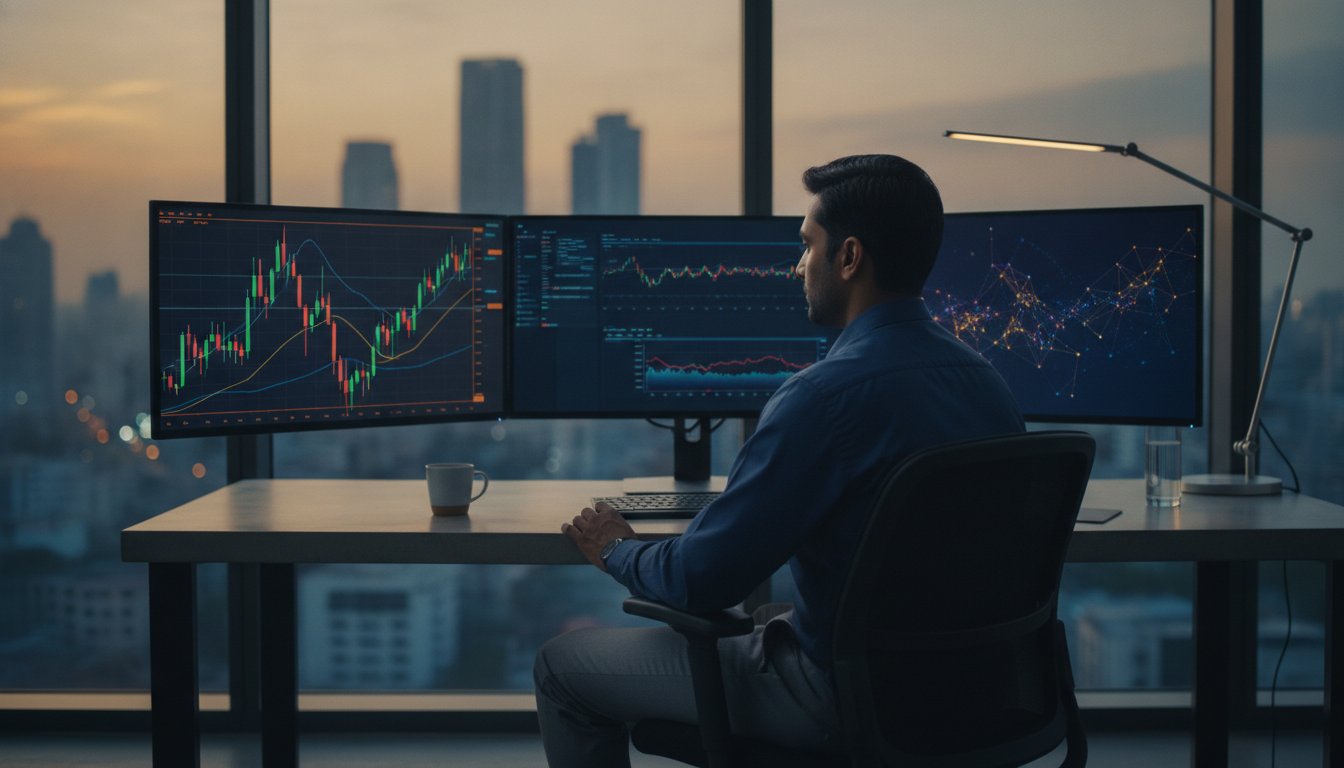
Eighty-nine percent. That is the percentage of retail traders who lost capital in the equity segment last year, according to SEBI data. Most didn't lose because they lacked a strategy; they lost because they failed to avoid intraday trading mistakes during the heat of the session. You've likely felt that familiar sting. The market opens, volatility spikes, and suddenly your plan feels like a suggestion rather than a rule. You hesitate on a stop-loss. You chase an illiquid ticker. You make an emotional decision that costs you a week's worth of gains.
It's time to stop paying the 'market tuition' of avoidable losses. You can master the same rigorous preparation habits used by professional NSE traders to gain a lasting edge. We'll show you how to move beyond theory and into disciplined execution. This guide previews a systematic approach to session preparation, using historical replays to uncover your behavioral blind spots. You'll learn to slow the market down, refine your vision, and build the calm readiness required to trade with professional-level confidence.
Key Takeaways
- Stop paying "market tuition" by moving your learning process from the live session to a controlled environment.
- Identify structural traps and liquidity risks to help you avoid intraday trading mistakes before they impact your balance.
- Neutralize psychological triggers like revenge trading and FOMO. Develop a methodical, preparation-first mindset that values discipline over impulse.
- Replace the illusion of hindsight with dynamic session replays. Challenge yourself to make decisions in real-time as candles form.
- Build a professional-grade workflow using high-fidelity NSE data. Refine your execution until precision becomes your default state.
Table of Contents
- The High Cost of Learning: Why Most Intraday Traders Fail
- Strategic Blunders: Technical Errors That Drain Your Capital
- The Psychology of Error: Why Knowledge Doesn't Equal Execution
- Building a 'Mistake-Proof' Workflow Through Market Replay
- Mastering the NSE with 1paisaa: Practice Until Errors Vanish
The High Cost of Learning: Why Most Intraday Traders Fail
The live market is a brutal teacher. It charges a steep fee in the form of hemorrhaging capital; a phenomenon often called "Market Tuition." Many beginners treat their trading account like an involuntary donation to more experienced players. They believe that the only way to learn Day trading is by surviving the fire of live sessions. It's a costly fallacy. This approach doesn't build skill; it builds trauma. It turns potential strategists into hesitant participants who fear the very charts they should be analyzing.
Success isn't about knowing the strategy. It's about the cold, calculated execution of that strategy when the pressure is at its peak. You might understand a VWAP bounce or a candle breakout in a textbook. But when the price action accelerates, your pulse quickens. To avoid intraday trading mistakes, you must bridge the gap between theoretical knowledge and mechanical action. This bridge is built in the hours before the market opens, not during the chaos of the session itself.
The Reality of NSE Intraday Volatility
The NSE isn't a gentle stream; it's a high-pressure firehose. Nifty and Bank Nifty can move with a speed that defies logic, swinging significant percentages in mere minutes. These rapid shifts aren't just data points. They are psychological triggers designed to provoke panic or greed. If you haven't experienced this velocity in a controlled environment, you'll default to emotional reactions. Controlled practice allows you to see the pattern within the volatility, turning a chaotic event into a predictable setup.
Moving Beyond 'Trading Tips'
Relying on external "calls" or Telegram tips is a recipe for long-term failure. It breeds a dangerous dependency that strips you of your edge. Professional traders understand that self-reliance is the only sustainable path. They use simulation tools to avoid intraday trading mistakes by replaying sessions until their entries and exits become instinctive. This methodical preparation transforms your mindset. You stop being a spectator of the market's whims and become a disciplined strategist who trusts their own vision.
This transition marks the end of gambling. It's the moment you stop hoping for a win and start preparing for one. By treating your trading as a profession rather than a hobby, you uncover the hidden layers of price action. You begin to see what remains after the noise fades away. Mastery isn't a result of luck; it's the inevitable outcome of focused, repeated practice.
Strategic Blunders: Technical Errors That Drain Your Capital
Many traders enter the market like blindfolded runners. They ignore the broader market structure, failing to realize that trend identification is the first, non-negotiable step in any session. If the overarching trend is bearish, buying a minor dip is often just catching a falling knife. You're trading against a tide that doesn't care about your entry price. Without a clear map of the market's direction, your trades are merely guesses disguised as strategies.
Then there is the "Illiquid Stock" trap. It's a seductive error. You see a ticker with massive percentage gains and jump in, lured by the volatility. Entry is easy. However, when the momentum shifts, the buyers vanish. The bid-ask spread widens into a chasm, and suddenly, an exit is impossible. To avoid intraday trading mistakes like these, you must prioritize stocks with high relative volume. Precision in entry is worthless if you cannot liquidate your position without massive slippage.
Over-leveraging and the absence of a hard stop-loss are the final nails in the coffin. A single bad trade, fueled by excessive leverage and a "hope" strategy, can liquidate a small account in minutes. Professionals don't hope; they calculate. They know that a trade without a stop-loss isn't an investment; it's a prayer. You can refine your approach by using the 1paisaa Simulator to practice these exits before the market opens.
The Importance of Technical Analysis
Skipping your pre-market homework leads to impulsive, emotional entries. You must respect support and resistance levels, as they represent the market's collective memory. Technical analysis is the study of historical price action to predict future movements. It provides the structural framework for your day. Without this study, you're reacting to noise rather than responding to signals. Preparation turns a chaotic chart into a readable narrative.
Risk Management Fundamentals
Professionalism is defined by how you handle losses, not just your wins. Calculating position size relative to your total capital is the only way to ensure longevity. A 1% loss is a minor, manageable setback. A 10% loss is a psychological wound that often triggers a spiral of revenge trading. Regulatory bodies frequently warn that a lack of discipline leads to severe financial losses for retail participants. Before you commit real capital, you should validate trading strategy without risk using high-fidelity data. This ensures your execution is based on proven data rather than desperate impulse.
The Psychology of Error: Why Knowledge Doesn't Equal Execution
Knowledge is a map; execution is the journey. Most traders fail because they confuse the two. You can memorize every candlestick pattern, but when the market gaps against your position, that knowledge often evaporates. This is the psychological failure point. To truly avoid intraday trading mistakes, you must understand that your brain is wired for survival, not for the counter-intuitive world of risk management. Regulatory bodies emphasize these hazards in the Day-Trading Risk Disclosure Statement, highlighting that emotional instability is as much a risk as market volatility itself.
Revenge trading is a primal urge. It's the destructive need to 'win back' a loss, which often turns a minor setback into a total account liquidation. Similarly, FOMO (Fear of Missing Out) drives you to enter a trend just as it reaches exhaustion. You see the green candles and jump in, only to become the liquidity for professionals exiting their positions. These aren't just bad trades; they're emotional hijacks that bypass your logical mind.
When the market moves against you, you might experience the 'Deer in Headlights' effect. You freeze. You watch your stop-loss get hit and then sail past it, hoping for a reversal that never comes. You can learn to improve trading psychology with simulation by exposing yourself to these high-pressure scenarios repeatedly. Simulation creates a safe space to forge discipline, allowing you to build the muscle memory required to hit 'exit' without hesitation.
Anxiety and Decision-Making
Financial risk triggers a biological response. Adrenaline spikes. Judgment clouds. Simulation allows you to experience this stress without the actual loss of capital. By replaying high-volatility sessions, you desensitize your nervous system. You move from a state of panic to a state of neutral observation. You learn to see the price action for what it is, not for what your fear tells you it might be. This emotional neutrality is the hallmark of a professional strategist.
The Power of Routine
A pre-market checklist acts as an anchor in a chaotic session. It reduces the number of impulsive decisions you need to make during market hours. While a trading diary helps you document errors, it's often just a post-mortem of a failed session. True survival comes from mastering intraday trading discipline through pre-session drills. Routine replaces impulse. Methodical preparation replaces luck. When your process is automated, your errors vanish.
Building a 'Mistake-Proof' Workflow Through Market Replay
Static charts are a graveyard of missed context. They present a finished story, making every profitable entry look inevitable in hindsight. This "hindsight bias" is a dangerous trap. It convinces you that you've mastered a setup when you've actually just recognized a result. To truly avoid intraday trading mistakes, you must witness the candle as it struggles, stalls, and breaks. You need to feel the uncertainty of the live tick without the risk of the live market.
Dynamic replay is your investigative tool. It allows you to replay a single NSE session ten times, testing different exits or stop-loss placements. You aren't just looking at data; you're uncovering your own behavioral flaws. By rewatching the "tape," you see exactly where your pulse spiked and your strategy crumbled. You identify the specific price action that triggers your panic. This is how you move from a reactive trader to a proactive strategist. You can start building this discipline today with the 1paisaa Simulator.
Step-by-Step Simulation Practice
Begin by selecting a high-volatility session from the previous week. Don't pick a quiet day; pick the day that would have broken you. Play the session at 1x speed. This forces you to respect the clock. As each candle forms, ask yourself: Why am I taking this trade? Pause the replay when you feel a surge of emotion. Note the price level. Later, review the outcome to see if your fear was justified or if you simply lacked the vision to see the trend hold. This methodical review turns a mistake into a lesson.
Accelerated Learning Curves
Simulation allows you to compress time. In a single evening, you can replay five full sessions. This equates to a month of live market experience without the corresponding financial loss. You see more market cycles. You witness more fake-outs. You learn to recognize the subtle signatures of institutional movement. The transition to the live market happens when your simulator performance is boringly consistent. When the "new" market feels like a replay you've already mastered, you are ready. Mastery is no longer a matter of luck; it's a result of your preparation.
Mastering the NSE with 1paisaa: Practice Until Errors Vanish
Expertise isn't granted; it's forged. The 1paisaa Simulator provides the high-fidelity environment you need to neutralize your worst impulses. By using real, tick-by-tick NSE data, you can recreate the exact conditions of past market sessions. This isn't just a review; it's a replay of reality. You can adjust playback speeds to slow down a chaotic breakout or speed up a consolidation phase. This level of control allows you to avoid intraday trading mistakes by identifying the specific moments your discipline begins to waver. You see the error, you replay the session, and you fix the behavior.
We call this the 'Z-Zero' approach. Most traders start their day with a baseline of anxiety, wondering how the market will behave. When you use this intraday preparation tool, you start with zero stress because you've already 'pre-played' the scenarios. You've seen the volatility before the opening bell rings. You aren't guessing what Nifty might do; you're executing a plan you've already practiced in a simulated environment. This preparation transforms your strategy from a hopeful theory into a mechanical certainty.
High-Fidelity NSE Session Replay
The simulator gives you access to 50+ stocks and historical Nifty sessions, providing a deep well of market history to explore. You can practice Nifty and Bank Nifty levels with exact price movements, ensuring your technical analysis holds up under real-world pressure. This allows you to backtest strategies without any financial risk. You don't need to lose capital to gain experience. Instead, you use the data to uncover the hidden layers of the market, refining your entries until they are surgical. Experience becomes a result of repetition, not just time spent watching a live screen.
Your Path to Professionalism
It's time to stop being the liquidity for professional traders. The market is a zero-sum game; the disciplined take capital from the impulsive. By choosing to practice before you trade, you join an elite group that values preparation over luck. You move from a state of reactive panic to one of calm readiness. This is the hallmark of a professional strategist. Start your free trial today. Uncover your blind spots, master your execution, and avoid intraday trading mistakes before they cost you another rupee. The tools for mastery are here; the rest is up to your dedication.
Elevate Your Strategy Beyond the Opening Bell
Professionalism in the NSE is a choice. It's the decision to stop guessing and start preparing. You've seen how technical blunders and psychological triggers drain capital; now you have the blueprint to neutralize them. To avoid intraday trading mistakes, you must replace impulsive reactions with a "mistake-proof" workflow. Mastery isn't found in the heat of a live session. It's built in the quiet hours of simulation where vision is sharpened and discipline is forged.
You no longer need to risk your hard-earned capital to gain market experience. High-fidelity tick-by-tick replay allows you to backtest NSE strategies with absolute realism. You can Master the NSE with the 1paisaa Simulator and join the ranks of disciplined traders who value preparation over luck. Practice without losing a single paisa. Uncover the hidden layers of price action today. Your journey from a retail participant to a professional strategist begins with a single, deliberate replay. The market rewards the ready; it's time to be one of them.
Frequently Asked Questions
What is the most common mistake made by new intraday traders in India?
The most frequent error is over-leveraging without a clear exit strategy. Many retail traders in India enter positions using maximum margin; they hope for a quick win but lack a hard stop-loss. This turns a single market fluctuation into a catastrophic loss. To avoid intraday trading mistakes, you must treat your capital as a tool for survival, not a chip for gambling. Discipline starts with respecting the math of risk.
How can I stop emotional trading during live NSE sessions?
Emotional trading stems from uncertainty. You can stop these impulses by "pre-playing" your session through high-fidelity simulation. When you've already witnessed a Nifty gap-down or a sudden spike in a simulated environment, your biological response during the live session remains neutral. Preparation replaces panic. You move from a state of reactive fear to a state of calm, methodical execution. Your checklist becomes your anchor.
Is paper trading effective for avoiding real-market mistakes?
Traditional paper trading is often too static to be effective. It lacks the tick-by-tick pressure of a moving market. A historical NSE session replay is far more powerful because it forces you to make decisions in real-time as candles form. You experience the uncertainty of the trade. This "dynamic" practice is the only way to build the muscle memory required to execute your plan under live market stress.
Why is a stop-loss order essential for intraday trading?
A stop-loss is your non-negotiable insurance policy. Without it, you're practicing a "hope" strategy that eventually leads to ruin. In the fast-paced NSE environment, price movements can be violent and unpredictable. A hard stop-loss ensures that no single error can liquidate your account. It allows you to stay in the game long enough to find the next high-probability setup. Survival is the first step toward mastery.
How much capital should I risk on a single intraday trade?
Professional traders typically risk only 1% to 2% of their total account capital on any single trade. This conservative approach ensures that a losing streak doesn't become a psychological wound. If you risk 10% and lose, you're forced into revenge trading to recover. By keeping your risk small, you maintain emotional neutrality. You can validate these risk levels using an intraday preparation tool before committing real money to the market.
Can market simulators really help me improve my trading timing?
Simulators are highly effective for refining your entry and exit timing. By replaying the same session multiple times, you begin to see the subtle "footprints" of institutional buyers. You learn to recognize when a trend is exhausted and when a breakout is genuine. This repetition compresses months of live experience into a few hours of focused practice. Timing becomes a result of vision rather than a lucky guess.
What should I do if I have a series of losing trades?
Stop trading immediately. A series of losses often leads to the "Deer in Headlights" effect or destructive revenge trading. Step away from the live screen and return to simulation. Replay your losing sessions to uncover the "why" behind the failure. Was it a structural error or a psychological hijack? Use the simulator to regain your confidence and refine your discipline before you return to the live NSE session.
How do I identify illiquid stocks to avoid them in day trading?
Check the relative volume and the bid-ask spread before entering. Illiquid stocks often show tempting percentage gains but have very few active buyers and sellers. To avoid intraday trading mistakes in these tickers, look for narrow spreads and high tick frequency. If the gap between the buy and sell price is wide, your exit will be impossible without massive slippage. Always prioritize stocks with deep, consistent liquidity.
Questions
What is the most common mistake made by new intraday traders in India?
The most frequent error is over-leveraging without a clear exit strategy. Many retail traders in India enter positions using maximum margin; they hope for a quick win but lack a hard stop-loss. This turns a single market fluctuation into a catastrophic loss. To avoid intraday trading mistakes, you must treat your capital as a tool for survival, not a chip for gambling. Discipline starts with respecting the math of risk.
How can I stop emotional trading during live NSE sessions?
Emotional trading stems from uncertainty. You can stop these impulses by "pre-playing" your session through high-fidelity simulation. When you've already witnessed a Nifty gap-down or a sudden spike in a simulated environment, your biological response during the live session remains neutral. Preparation replaces panic. You move from a state of reactive fear to a state of calm, methodical execution. Your checklist becomes your anchor.
Is paper trading effective for avoiding real-market mistakes?
Traditional paper trading is often too static to be effective. It lacks the tick-by-tick pressure of a moving market. A historical NSE session replay is far more powerful because it forces you to make decisions in real-time as candles form. You experience the uncertainty of the trade. This "dynamic" practice is the only way to build the muscle memory required to execute your plan under live market stress.
Why is a stop-loss order essential for intraday trading?
A stop-loss is your non-negotiable insurance policy. Without it, you're practicing a "hope" strategy that eventually leads to ruin. In the fast-paced NSE environment, price movements can be violent and unpredictable. A hard stop-loss ensures that no single error can liquidate your account. It allows you to stay in the game long enough to find the next high-probability setup. Survival is the first step toward mastery.
How much capital should I risk on a single intraday trade?
Professional traders typically risk only 1% to 2% of their total account capital on any single trade. This conservative approach ensures that a losing streak doesn't become a psychological wound. If you risk 10% and lose, you're forced into revenge trading to recover. By keeping your risk small, you maintain emotional neutrality. You can validate these risk levels using an intraday preparation tool before committing real money to the market.
Can market simulators really help me improve my trading timing?
Simulators are highly effective for refining your entry and exit timing. By replaying the same session multiple times, you begin to see the subtle "footprints" of institutional buyers. You learn to recognize when a trend is exhausted and when a breakout is genuine. This repetition compresses months of live experience into a few hours of focused practice. Timing becomes a result of vision rather than a lucky guess.
What should I do if I have a series of losing trades?
Stop trading immediately. A series of losses often leads to the "Deer in Headlights" effect or destructive revenge trading. Step away from the live screen and return to simulation. Replay your losing sessions to uncover the "why" behind the failure. Was it a structural error or a psychological hijack? Use the simulator to regain your confidence and refine your discipline before you return to the live NSE session.
How do I identify illiquid stocks to avoid them in day trading?
Check the relative volume and the bid-ask spread before entering. Illiquid stocks often show tempting percentage gains but have very few active buyers and sellers. To avoid intraday trading mistakes in these tickers, look for narrow spreads and high tick frequency. If the gap between the buy and sell price is wide, your exit will be impossible without massive slippage. Always prioritize stocks with deep, consistent liquidity.